 Noor Elbayan Academy
Learning the Quran and Arabic Online: Seven Key Benefits

Online learning has made Quran memorization and Arabic study accessible to families everywhere, whether or not Arabic is spoken at home. Noor Elbayan Academy teaches children the rules of the Arabic language and the principles of Quran recitation from home, at times that suit the family, in programmes matched to each learner’s level.
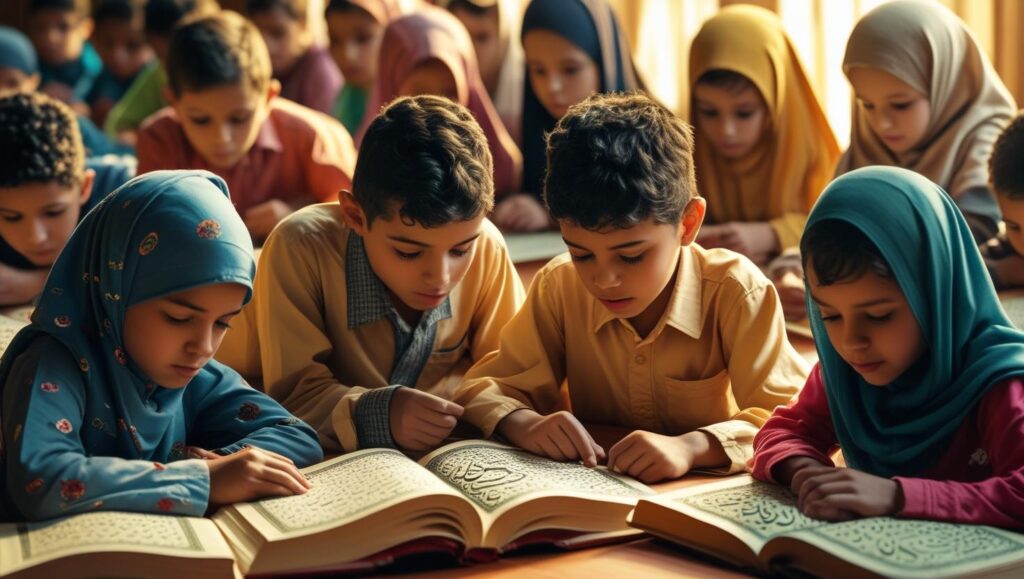
The value of these courses lies not only in the information they convey. They are a first step toward a strong relationship with the Quran and its etiquette. Learning and memorizing the Quran is among the most important influences on a child’s character and on the growth of spiritual and moral values.
Quran and Arabic courses at Noor Elbayan Academy
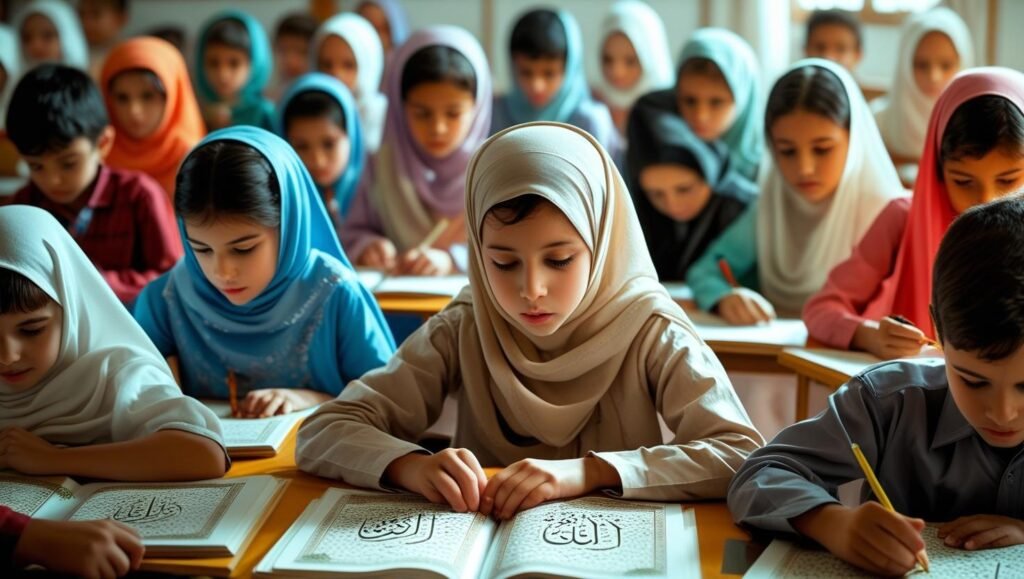
Noor Elbayan Academy offers a comprehensive online programme of Quran memorization for children in a comfortable and safe environment. Qualified, specialist teachers help children learn to recite the Quran and understand its meanings in an enjoyable way, alongside the rules of Arabic.
The interactive lessons cover reading, Tajweed and writing, so that children build a firm foundation in Arabic while learning the rules of recitation. The academy also aims to instil a love of learning and excellence, and to strengthen children’s attachment to the Quran and its language.

1. Easier access to education
Accessibility
- Removing geographical barriers: students in remote or rural areas can join courses without travelling to a learning centre.
- Saving time and effort: less time spent travelling leaves more attention for study.
A wide range of learners
- Meeting different needs: online programmes can serve children, teenagers and adults, which supports continuous learning.
- Teaching every level: programmes can be offered for every level of skill, from beginner to advanced.
Support for personal learning
- A tailored experience: students choose courses that match their interests and needs, which increases motivation and engagement.
- A flexible timetable: students choose suitable times and balance study with other commitments.
Access to teachers
Online learning connects students with qualified teachers wherever they live, which enriches their learning experience.
2. Stronger language skills
Reading and writing
- Better reading: regular work with the Quranic text and other Arabic texts strengthens reading and deepens understanding of the language.
- Correct writing: courses teach writing properly, including grammar and spelling.
Listening
- Listening to recitation: listening to Quran recitation improves listening skills and understanding of Arabic and Tajweed.
- Interaction with teachers: working with specialist teachers helps students grasp meanings and concepts more accurately.
Speaking and expression
- Speaking practice: students are encouraged to speak through discussion and presentation, which builds confidence.
- Oral expression: continuous interaction improves the ability to express thoughts and feelings in Arabic.
Use of technology
- Digital language tools: students become familiar with tools and applications for language learning.
- Varied resources: videos, articles and interactive exercises support well-rounded language learning.
Learning the Quran and Arabic online therefore develops all four skills: reading, writing, listening and speaking.
3. Flexible time
Organizing the timetable
- Choosing lesson times: students select lesson times that fit their daily schedule and other activities.
Setting aside time for study
- Studying at the best time: students can study when their energy and concentration are highest.
- Independent learning: learning in their own time helps students develop personal study habits.
Balancing commitments
- Work, family and study: students with jobs or family duties can coordinate their schedules more easily.
- Less time pressure: without travel, students can concentrate on learning and developing their skills.
Adapting to circumstances
- Adjusting to change: timetables can be changed easily when personal or professional circumstances change unexpectedly.
- Tailored teaching: the curriculum can be adapted to the needs of each student.
4. Effective use of technology
Digital learning tools
Online learning platforms provide interactive lessons and learning resources, and give students access to content and to their teachers from a computer or a smartphone.
Varied resources
- Multimedia: video, animation and audio make learning more interactive and appealing.
Effective communication
- Video conferencing: students interact live with their teachers, which encourages participation.
Assessment and follow-up
- Online tests: teachers assess progress regularly and identify each student’s strengths and weaknesses.
- Feedback: immediate feedback helps students improve quickly.
- Tracking performance: teachers follow each student’s performance, adapt the content to individual needs and offer support promptly.
5. Varied content
Different ways of learning
- Audio-visual teaching: content based on sound and image suits learners of different styles.
- Practical learning: practical exercises and interactive educational games help students understand concepts.
A range of subjects
- Different courses: Noor Elbayan Academy offers courses in subjects such as Tajweed, Arabic grammar and the stories of the Quran.
- Age-appropriate content: content is matched to the age and level of each student.
Varied sources
- Electronic books and articles: students can draw on more than one source.
Supplementary lessons
- Review lessons: supplementary and revision lessons consolidate skills and understanding.
- Additional support: advanced lessons, or extra help for students who need it, can be arranged.
6. Strengthening Islamic values
Good character and conduct
- Lessons on character: lessons on honesty, trustworthiness and forgiveness help students develop in line with Islamic values.
- Role models: stories from the lives of the prophets and the Companions reinforce patience, generosity and selflessness.
Islamic identity
- Pride in Islamic culture: learning about Islamic history and civilization builds a sense of belonging.
- Customs and traditions: students learn Islamic customs such as the celebration of Eid and the practices of Ramadan.
Social responsibility
- Supporting those in need: teaching about Zakah and charity reinforces the values of giving and helping others.
Fiqh in the curriculum
- Lessons in Fiqh and Islamic rulings: courses in Islamic Fiqh help students understand the requirements of the religion correctly.
- Applying guidance in daily life: students learn how to seek and use sound religious guidance when making decisions.
Spiritual development
- The importance of prayer: prayer is presented as a pillar of daily life, and children learn to perform it correctly.
- Connection with Allah: students learn how to supplicate and turn to Allah.
Teaching these values helps raise an aware generation of good character that carries its responsibilities toward itself and its community and applies the teachings of the religion in daily life.
7. Continuity in learning
Continuous teaching
- Extended programmes: courses that run throughout the year allow students to learn without interruption.
- Updated curricula: content is revised periodically to meet students’ needs.
Ongoing interaction and support
- Interactive sessions: regular sessions between teachers and students allow experience and ideas to be shared.
- Individual support: students who need additional help receive it individually.
Assessing performance
- Periodic tests: regular tests measure each student’s level and show what needs improvement.
- Continuous feedback: students learn where they are strong and where they need more work.
Encouraging self-study
- Additional resources: electronic books, videos and articles encourage students to learn independently.
- Personal projects: projects that reflect what students have learned strengthen their love of knowledge.
Lifelong learning skills
- Learning how to learn: methods such as research and analysis develop skills that last a lifetime.
- Encouraging curiosity: exploring new and varied subjects nurtures curiosity.
Continuity keeps students in constant contact with knowledge and builds a generation that keeps learning and adapts to change.
Contact the academy
Families with questions about the courses are welcome to contact Noor Elbayan Academy. The team answers enquiries and helps parents choose the right course for their children.