 Noor Elbayan Academy
Benefits of the Noor Al-Bayan Method for Teaching Children Online
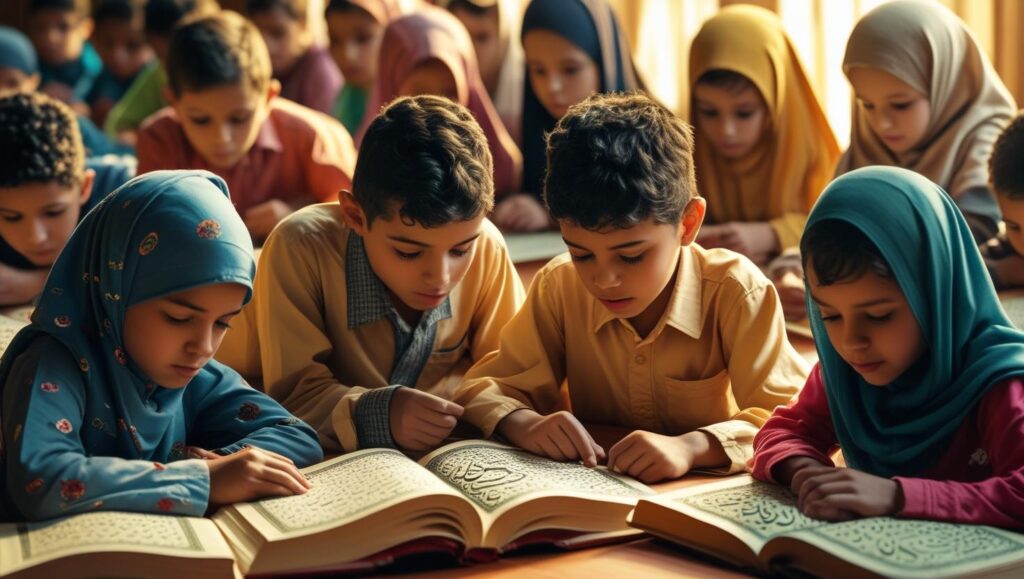
The Noor Al-Bayan method is a well-established way of teaching children Arabic and the Quran, and it works especially well in online lessons. It builds reading and writing skills for children step by step and connects them to the Quran from the start. Its main advantages are set out below.

Easy to use for teachers and children
The method is designed to make learning simple for both the teacher and the child:
- Clear, simple structure: the method is well organised, so teachers know exactly how to present each part.
- Ordered lessons: lessons follow a logical sequence that children can follow without confusion.
- Teacher’s guide: a guide gives teachers strategies and directions for delivering lessons effectively.
- Easy interaction: online platforms let teachers and students communicate and share material with ease.
- Accessible materials: teachers and parents can reach the learning materials easily, which simplifies planning.
- Works on any device: lessons can be followed on a computer, tablet or smartphone, wherever the child is.
A wide range of learning materials
One of the method’s strengths is the variety of resources that support the child’s learning:
- Carefully designed books: simplified texts with illustrations that make the content easy to grasp.
- Educational videos: short, engaging clips that explain ideas visually.
- Interactive apps and games: children practise what they have learned in an enjoyable way on smart devices.
- Audio resources: Quran recitations and audio lessons that train listening and understanding.
- Exercises and practical activities: tasks that strengthen reading and writing.
- Several learning styles: visual, auditory and hands-on teaching, to suit different children.
- Stories: educational stories that link the Arabic language to the teachings of the Quran and to Islamic values.
- Assessment tools: regular checks on progress with immediate feedback.
Teaching reading and writing
Reading and writing are at the heart of the method, as explained in the academy’s guide to teaching children the Quran online with the Noor Al-Bayan method.
- Gradual progression: children begin with the letters, then move on to forming words and sentences, so skills build logically.
- Repetition and practice: varied exercises help children remember letters and words and master each skill.
- Multiple techniques: flashcards, movement activities and games hold children’s attention and make learning enjoyable.
- Understanding meaning: children learn what words mean and how they are used in different contexts, so they understand texts more deeply.
- Writing practice: activities such as writing simple sentences and short stories strengthen writing skills.
- Everyday relevance: activities drawn from daily life show children how to use their language skills.
- Standard Arabic: the focus on classical, standard Arabic helps children read and write correctly.
- Regular assessment: teachers and parents can see which points need more work.
Deeper understanding of the Quran
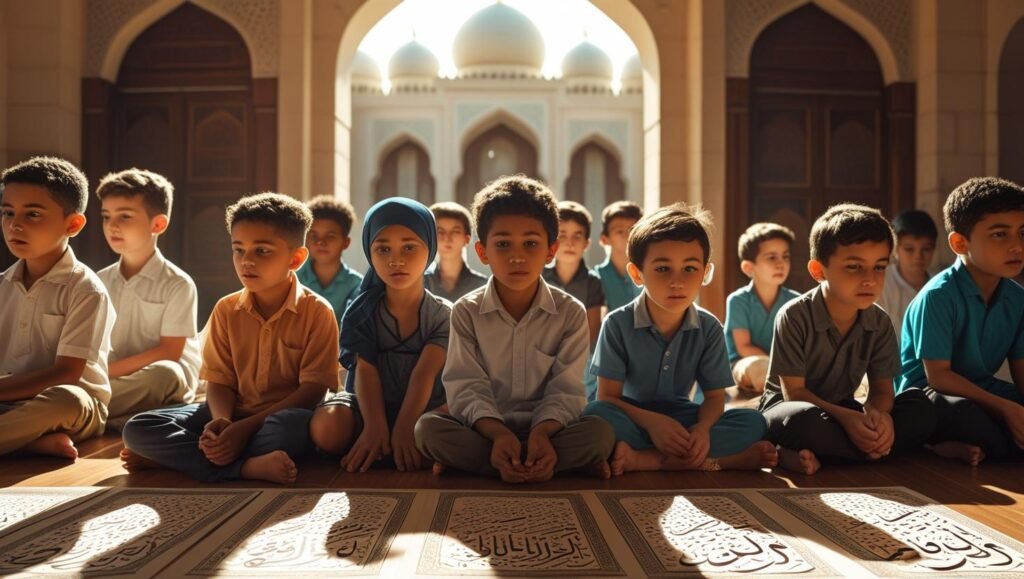
A main aim of the method is for children to understand the meanings and values of the Quran, not only to read it. It does this by combining Quran memorization with learning to read:
- Simplified explanation: verses are explained in simple terms so children grasp the basic meanings.
- Linking verses to real life: children connect what they read to everyday situations.
- Morals and values: lessons draw out the values of the Quran and help shape good behaviour.
- Interactive activities: discussion with the teacher, small projects and role play make learning active.
- Repetition and revision: regular review fixes the verses in the child’s memory.
- Multimedia: videos, audio and illustrations clarify the meanings of the verses.
- Encouraging questions: children are invited to ask about the verses, which develops curiosity and critical thinking.
- Storytelling: stories make Quranic ideas easier and more enjoyable to absorb.
- Correct recitation: children learn to recite properly, which deepens their love for the Quran.
Interaction and participation
Children learn best when they take part. The method encourages this through:
- Interactive platforms: children engage directly with the content.
- Discussion: teachers give children room to share their ideas and opinions, building confidence in expressing themselves.
- Active participation: for example reading aloud or presenting a topic.
- Immediate feedback: children hear straight away how they are doing, which motivates them.
- Parental involvement: parents are encouraged to take part, which strengthens the link between home and teacher.
Flexible learning
Flexibility is a large part of the benefits of the Noor Al-Bayan method in online teaching:
- Learning at the child’s own pace: children take the time they need to understand and overcome difficulties.
- Access at any time: materials can be reached whenever and wherever suits the family.
- Repeating lessons: content can be watched or read again as often as needed.
- Tailored lessons: teachers adapt lessons and activities to each child’s needs and level, giving extra support where it is needed.
- Learning anywhere: at home or elsewhere, wherever the child feels comfortable.
- Extra resources: additional videos and reading to reinforce learning.
- Time management: children fit study around their own schedule and balance it with other activities.
- Independence: organising, planning and managing time help children become independent learners.

Continuous assessment
Ongoing assessment improves the whole learning experience:
- Tracking progress: teachers and parents regularly see how well the child has understood the material.
- Identifying strengths and weaknesses: support can be directed where it is needed.
- Immediate feedback: children are encouraged to improve at the right moment.
- Short quizzes: quizzes on recent lessons reinforce understanding and encourage regular revision.
- Varied assessment: oral recitation, short written tasks and tests make assessment broader and more engaging.
- Self-assessment: children learn to judge their own work and improve it.
- Involving parents: parents follow their child’s progress and help build on strengths.
- Life skills: assessment looks beyond academic results to the life skills and social values children are learning.
- Motivation: recognising clear progress encourages children to keep working.
- Better teaching: teachers adjust their methods in light of the results.
Teaching values and good character
The method aims to develop the child’s character by nurturing Islamic values and principles:
- Rooted in the Quran and Sunnah: values are taught through Quranic verses and prophetic hadith, strengthening the child’s Muslim identity.
- Stories: children learn from the examples of figures in the Quran and Islamic history.
- Interactive activities: projects and games help children understand values and apply them in daily life.
- Respect and tolerance: the basis of good relationships with others.
- Encouraging good behaviour: through role models and supporting materials.
- Responsibility: children are encouraged to take responsibility for their actions.
- Discussing values: children express their own thoughts and learn to reason about right and wrong.
- Practical application: children are encouraged to put values into practice at home and in daily life.
- Social awareness: children learn the importance of helping others and their role in building a better community.
- Reviewing progress: regular checks on how well children have absorbed these values.
Encouraging creativity
The method also develops children’s ability to think for themselves and come up with new ideas:
- Varied activities: art projects and hands-on tasks let children express their ideas creatively.
- Critical thinking: children are encouraged to ask questions and consider more than one solution to a problem.
- Technology: educational apps let children try out new ideas.
- Inspiring stories: stories of creative, inventive people inspire children to develop their own ideas.
- A safe environment: children feel comfortable trying new things and making mistakes without fear of failure.
- Personal projects: children can choose projects that reflect their interests, which increases motivation.
- Trying again: the chance to experiment and repeat helps children refine their ideas.
- Recognition: creative achievements are praised and rewarded.
- Problem solving: children learn to approach challenges inventively.
How Noor Elbayan Academy helps children learn the Quran online
Noor Elbayan Academy puts this method into practice in its online Quran and Arabic lessons for children:
- One-to-one lessons: each live lesson is taught individually and designed around the child’s needs and level.
- Qualified teachers: certified Azhari teachers experienced in teaching Quran memorization and Arabic.
- A complete curriculum: memorization goes hand in hand with explanation, so children understand the verses they learn.
- Modern tools: live online lessons make learning possible from anywhere.
- Direct interaction: children interact with their teacher in real time.
- Flexible scheduling: families choose lesson times that suit them.
- Continuous assessment: progress is followed closely and areas needing more work are identified.
- Interactive apps: tools that help with memorization and recitation practice.
- Support for parents: parents receive a report after every lesson and guidance on supporting learning at home.
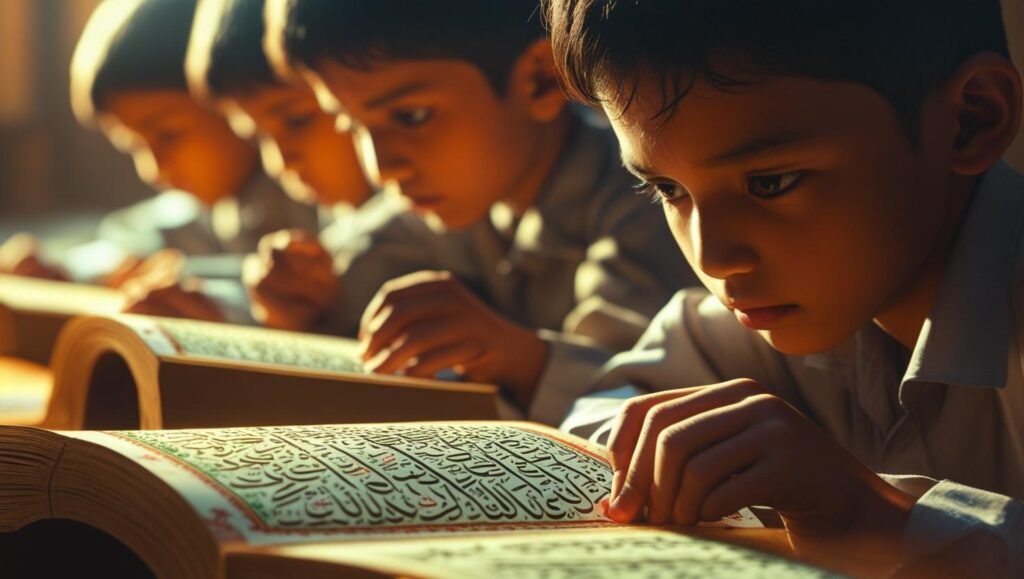
Together, these features give children an effective environment in which to memorize and understand the Quran, strengthen their bond with it and grow in character.
Join Noor Elbayan Academy
Join Noor Elbayan Academy for online Quran memorization.
Learning at the academy helps children build a strong relationship with the Quran. Through this method they learn the rules of Tajweed and memorize the Quran in an enjoyable, interactive way.
Contact the academy to find the course that best suits your child and to book a free trial lesson.