 Noor Elbayan Academy
How to Teach Children to Read and Write Arabic and Tajweed
Learning the Quran should be an enjoyable experience for a child, and it begins with the letters. Knowing each letter and pronouncing it correctly is the foundation on which reading and sound Quran recitation are built. A child who masters the letters can read words accurately, understands more of what they read, avoids the common recitation mistakes, and is ready to learn Tajweed properly. It also improves their everyday language skills and gives them confidence when they read and speak.
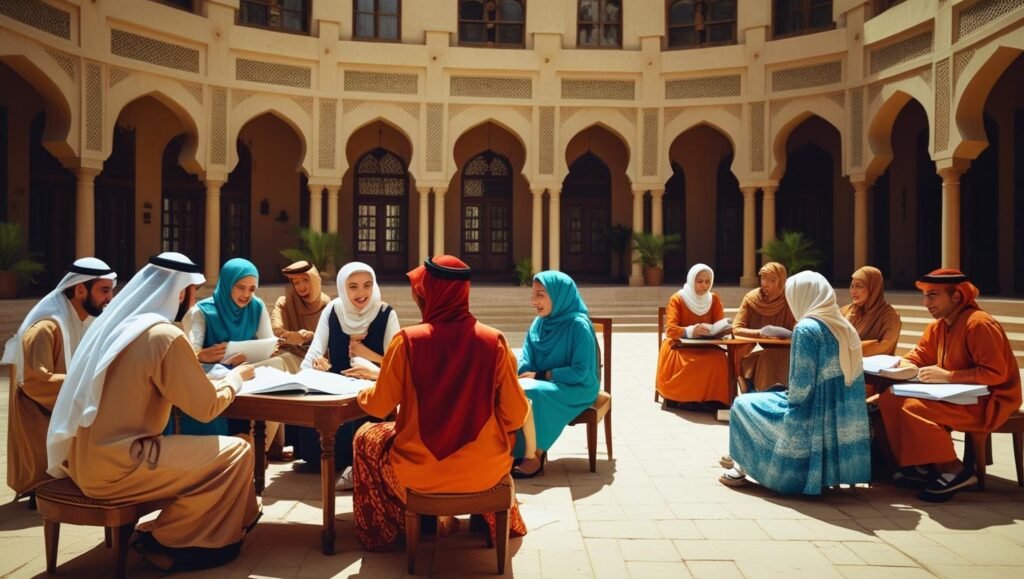
When can a child pronounce letters correctly?
Children come to pronounce sounds correctly during the early years, as their speech and language develop gradually. How quickly this happens depends on several factors:
- Exposure: the more conversation and reading aloud a child hears, the faster their pronunciation develops.
- Regular practice: repeating sounds correctly, again and again, fixes the letters in memory.
- Guided teaching: a structured programme such as the Noor Al-Bayan method teaches letter rules and correct pronunciation from an early age.
- Individual differences: every child develops at their own pace, so some will progress sooner than others.
Teaching children Arabic and the Quran works best when it is playful. Introduce the letters interactively through games and art, use the Noorani Qaida to train correct sounds, then bring in Quran-based activities such as recitation. Short, regular review sessions fix what has been learned and build the child’s confidence in using the language.
Ten ways to teach children the Arabic letters
- Educational games: letter cards and puzzles teach the shape and sound of each letter in a fun way.
- Colourful books: read books with bright pictures and clear letters; short stories and riddles are particularly effective.
- Songs and nasheeds: letter songs help children memorise the alphabet easily.
- Drawing and writing: let children draw the letters, write them on paper or shape them from clay, which builds muscle memory.
- Technology: interactive apps and online games can support letter learning.
- Repetition: make the letters part of the daily routine and practise them regularly.
- Movement: link each letter to a jump or an action.
- Letters all around: point out letters on signs and in shops so children recognise them in different settings.
- Art: colouring and craft activities reinforce what they have learned.
- Patience and support: stay patient and acknowledge every step of progress, however small.
How to teach your child to spell
Once the letters are familiar, spelling can be taught with the same variety:
- Start with the alphabet: make sure your child knows the shape and sound of every letter before moving on.
- Play word-building games: letter cards and word puzzles keep spelling enjoyable.
- Read aloud: read simple stories and explain the hard words, so your child sees how words are spelled inside sentences.
- Write by hand: begin with large letters, then move on to simple words.
- Practise spelling: start with short words and work up gradually to longer, harder ones.
- Review often: a short daily or weekly review keeps earlier lessons fresh.
- Reward progress: small rewards keep motivation high.
- Encourage interaction: ask questions and talk together about letters, words and phrases.
How to teach your child Tajweed
Tajweed is learned step by step. These steps help a child recite the Quran correctly:
- Explain what Tajweed is. Introduce the idea of Tajweed in simple terms: reciting the Quran correctly, following the rules scholars set down so that every letter and sound is pronounced properly.
- Listen to skilled reciters. Let your child listen regularly to recordings of skilled, precise reciters. This shows them how the letters and rules such as lengthening (madd), izhar and ikhfa actually sound.
- Use a programme made for children. Methods such as the Noor Al-Bayan method combine the letters with Tajweed rules in a simplified way.
- Learn with a specialist teacher. Working with a qualified teacher is an important step: the teacher simplifies the rules and corrects pronunciation mistakes on the spot.
- Repeat daily. Set aside time every day to read the Quran with Tajweed. Begin with short, easy verses and increase the difficulty as your child progresses.
- Encourage and motivate. Use praise and rewards, and hold small recitation competitions within the family or with friends.
- Practise the articulation points. The points of articulation (makharij) are among the most important parts of Tajweed. Teach your child where each letter comes from: the throat, the lips, the tongue.
- Follow up. Check progress regularly with short assessments or reviews so that mistakes are caught early.
- Do sound drills. Daily phonetic exercises noticeably improve articulation.
Why teach your child Tajweed?
Tajweed does more than refine pronunciation; it has religious and educational benefits:
- Obeying Allah’s command. Tajweed is part of reciting the Quran as it was revealed. Allah says: «وَرَتِّلِ الْقُرْآنَ تَرْتِيلًا» — “And recite the Quran with measured recitation” (Al-Muzzammil: 4).
- Understanding the Quran better. Correct reading makes the verses clearer and more moving for the child.
- Stronger Arabic. Tajweed improves a child’s Arabic in general, especially the pronunciation of letters.
- Focus and attention. Attending to fine details of pronunciation trains concentration, which helps at school and beyond.
- A bond with the faith. A child who recites correctly feels close to Allah, and that attachment can last a lifetime.
- Commitment and discipline. Following rules carefully builds self-discipline that carries over into other areas of life.
- Reward. The Prophet ﷺ said: «من قرأ حرفًا من كتاب الله فله به حسنة، والحسنة بعشر أمثالها» — “Whoever reads a letter from the Book of Allah will have a good deed for it, and a good deed is multiplied tenfold.”
- A better voice and recitation. Children learn to control their voice, making their recitation more beautiful.
- A foundation for other Islamic studies. Tajweed is the gateway to tafsir, Hifz and understanding the rulings of worship.
- Motivation to memorise. A child who reads verses correctly finds them easier to memorise and retains them for longer.

Why do some children find learning difficult?
There are several common reasons:
- Neurological differences: conditions such as dyslexia or ADHD affect how a child concentrates or takes in information taught in the traditional way.
- Learning styles: some children learn best by seeing, others by listening, others by doing. A child may struggle when the teaching does not match their style.
- Home and school environment: stress or instability at home, or an unsupportive classroom, makes it hard to focus.
- Emotional state: anxiety and pressure reduce a child’s ability to concentrate and absorb information.
- Language difficulties: challenges with their mother tongue or with the language of instruction make lessons harder to follow.
- Health factors: hearing or vision problems can hold a child back.
Identifying the real cause makes it possible to put the right support plan in place.
How to make your child love the Quran
- Be a role model: read the Quran regularly and let your love for it show.
- Tell Quran stories: use the stories of the prophets to explain the meaning of the verses.
- Interactive activities: drawing and games connected to the Quran make understanding enjoyable.
- Simple Tajweed: it helps your child taste the beauty of the Quran.
- Incentives: give small rewards when they master certain verses or memorise a Surah.
- A set time: read together every day and make it a special moment.
- Listening: listen together to beautiful, accurate recitations.
- Living the values: link the Quran’s teachings to everyday behaviour so your child sees its effect on their life.

Raising your child religiously and culturally
- Teach religious values: start with the basics through Quran stories and principles such as honesty, trustworthiness and mercy. Support your child in acts of worship like prayer and fasting, and make them a pleasant experience.
- Encourage reading: offer age-appropriate books on religion and culture — stories, facts and inspiring Muslim figures — and set aside time to read together.
- Engage with the world around them: take part in religious and cultural occasions, and visit libraries, museums and historical places.
- Teach life skills: communication, cooperation and problem-solving through group activities, using everyday situations to teach values.
- Encourage self-expression: let your child share thoughts and opinions freely through writing or art; listen to their feelings and questions.
- Build critical thinking: ask questions, encourage them to look for answers, and raise topics for discussion.
- Join community activities: volunteering and charity work teach the value of service and giving.
- Provide a positive environment: a home that encourages learning and exploration, away from negativity.
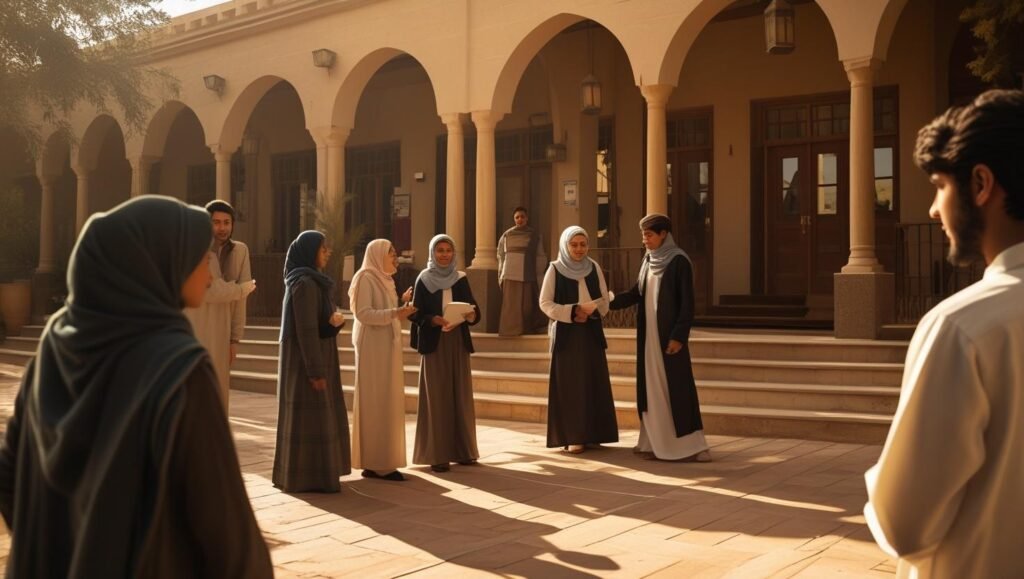
Make your child love reading
Reading together is also an effective way to grow closer to your child:
- Choose the book together: letting your child pick builds independence and enthusiasm.
- Read aloud every day: use different voices for the characters to bring the story to life.
- Talk about the book: ask about the characters, the events and what they learned. This develops critical thinking and helps them express feelings.
- Connect stories to daily life: if the book is about friendship, for example, talk about why friends matter.
- Do story-inspired activities: drawing, acting out the characters or making a craft.
- Encourage writing: help your child keep a notebook for their own stories.
- Visit libraries: let them explore new books and join reading activities.
What makes a good Noor Al-Bayan teacher?
- Thorough knowledge of the curriculum: a deep understanding of the Noor Al-Bayan content and its teaching methods.
- Strong communication: speaking clearly and building a positive relationship that encourages children to take part.
- Creative teaching strategies: varied methods such as educational games and interactive tools.
- The ability to motivate: inspiring students to learn independently and to love Arabic and the Quran.
- Patience and dedication: some students need extra time to understand fully.
- Adapting to each student: adjusting the approach to each child’s needs.
The method moves in clear steps, from pronouncing and writing the letters accurately, to spelling rules, to reading, with regular feedback and assessment to make sure the child is progressing.
Frequently asked questions
Is the Noor Al-Bayan method only for native Arabic speakers?
No. It is designed to teach Arabic and the Quran to all children whatever their language background, and its simple, complete approach works well for non-Arabic speakers.
Parents with questions about the courses are welcome to contact Noor Elbayan Academy. The academy’s team is available to answer enquiries and to help families choose the right course for their children.