 Académie Noor Elbayan
Learn Arabic Online for Non-Native Speakers | Expert Tutors

Learn Arabic Online for Non-Native Speakers
Arabic (العربية) is spoken by more than 400 million people and is the language of the Quran, a rich literary tradition, and more than twenty countries. For non-native speakers, it can look intimidating at first: a new script, unfamiliar sounds, and a grammar system unlike English. The good news is that you no longer need to travel or find a local teacher. With the right platform, you can learn Arabic online from home, at your own pace, with qualified native teachers guiding you step by step.
This guide explains how online Arabic learning works for non-native speakers, what a good program should include, and how to start today.

Why Learn Arabic Online?
Online learning removes the biggest obstacles that non-native speakers face:
- Access to native teachers. You learn correct pronunciation and natural expression directly from native Arabic speakers, wherever you live.
- Flexible schedules. Live classes can be booked around work, school, and family time across any time zone.
- One-to-one attention. Private lessons let the teacher adapt to your level, speed, and goals.
- Lower cost. Online courses usually cost far less than in-person institutes or study-abroad programs.
- Consistent progress. A structured curriculum keeps you moving forward instead of jumping between random videos and apps.
What Makes a Good Online Arabic Platform?
Not every website that promises fluency delivers it. Look for a platform designed specifically for non-native speakers, with these features:
1. A structured curriculum
Arabic should be taught in a clear order: letters and sounds first, then words, sentences, and conversation. Structured courses with defined levels (beginner, intermediate, advanced) let you see exactly where you are and what comes next.
2. Live, interactive classes
Recorded videos are useful for revision, but real progress comes from live classes where you speak, make mistakes, and get corrected immediately. Interactive lessons with screen sharing, digital whiteboards, quizzes, and conversation practice keep you engaged and help you remember more.
3. Qualified native teachers
A native speaker is not automatically a good teacher. The best tutors are native Arabic speakers who are also trained to teach Arabic as a foreign language and can explain concepts clearly in English.
4. Balanced skills
A complete program covers reading, writing, listening, and speaking together, supported by grammar, vocabulary, and pronunciation work in every lesson.
What You Will Learn, Step by Step
Step 1: The alphabet and pronunciation
You start with the 28 Arabic letters, their shapes at the beginning, middle, and end of a word, and the short and long vowels. Pronunciation is the foundation: sounds such as ع, ح, ق, and ض do not exist in English, and learning them correctly from the start saves months of correction later.
Step 2: Core vocabulary
Next, you build everyday vocabulary: greetings, numbers, family, food, time, and common verbs. Good courses teach words in context, through short dialogues and stories rather than isolated lists, so you can use them immediately.
Step 3: Grammar made simple
Arabic grammar is logical once it is introduced gradually. You learn nominal and verbal sentences, gender, the dual and plural, verb tenses, and the root system that connects families of words. A well-designed course introduces one rule at a time and practises it in real sentences.
Step 4: Reading and writing
You move from single words to short texts, then to longer passages. Writing practice reinforces spelling and helps vocabulary stick.
Step 5: Conversation and a final project
Speaking is practised from the first lesson, but at this stage it becomes the focus. Many programs end each level with a small project, such as introducing yourself, describing your city, or presenting a short topic in Arabic, so you can prove to yourself how far you have come.
Modern Standard Arabic or a Dialect?
Most non-native learners should start with Modern Standard Arabic (MSA, or الفصحى). It is the form used in books, news, formal speech, and education, and it is understood across the Arab world. It also opens the door to Quranic Arabic. Once you have a solid base, adding a dialect such as Egyptian or Levantine for daily conversation becomes much easier.
Arabic Classes for Kids
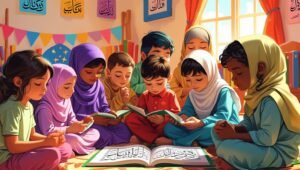
Children learn languages quickly when lessons are fun. Online Arabic classes for kids use games, songs, stories, colourful visuals, and short activities to hold attention. Sessions are shorter than adult lessons, teachers are patient and experienced with young learners, and parents receive regular progress reports. This is especially valuable for families living outside Arab countries who want their children to stay connected to the language.
Tips to Learn Arabic Faster
- Be consistent. Three short lessons a week are better than one long one.
- Review daily. Ten minutes of vocabulary revision each day makes a big difference.
- Speak from day one. Do not wait until you feel ready.
- Listen often. Podcasts, children’s cartoons, and Quran recitation train your ear.
- Set clear goals. Know whether you are learning for travel, work, religion, or family.
- Track your progress. Keep a notebook of new words and rules from every lesson.
Frequently Asked Questions About Learn Arabic Online for Non-Native Speakers
How long does it take to learn Arabic?
With two to three live lessons a week and regular practice, most beginners can read and hold simple conversations within three to six months. Advanced fluency takes longer and depends on consistency.
Can I learn Arabic online with no previous knowledge?
Yes. Beginner courses are designed for learners who start from zero, beginning with the alphabet and basic sounds.
Is Arabic too hard for English speakers?
It is different, not impossible. With a structured plan and a native teacher, each step is manageable.
Are online lessons suitable for kids?
Yes. Interactive lessons built for children are usually suitable from around age four or five.
Start Learning Arabic Today
Learning Arabic online has never been more accessible for non-native speakers. Choose a platform with structured courses, live interactive classes, and native teachers; commit to a regular schedule; and take it one step at a time. Book a trial lesson, meet your teacher, and start your journey with العربية today.