 Noor Elbayan Academy
Online Platforms for Learning and Memorizing the Quran
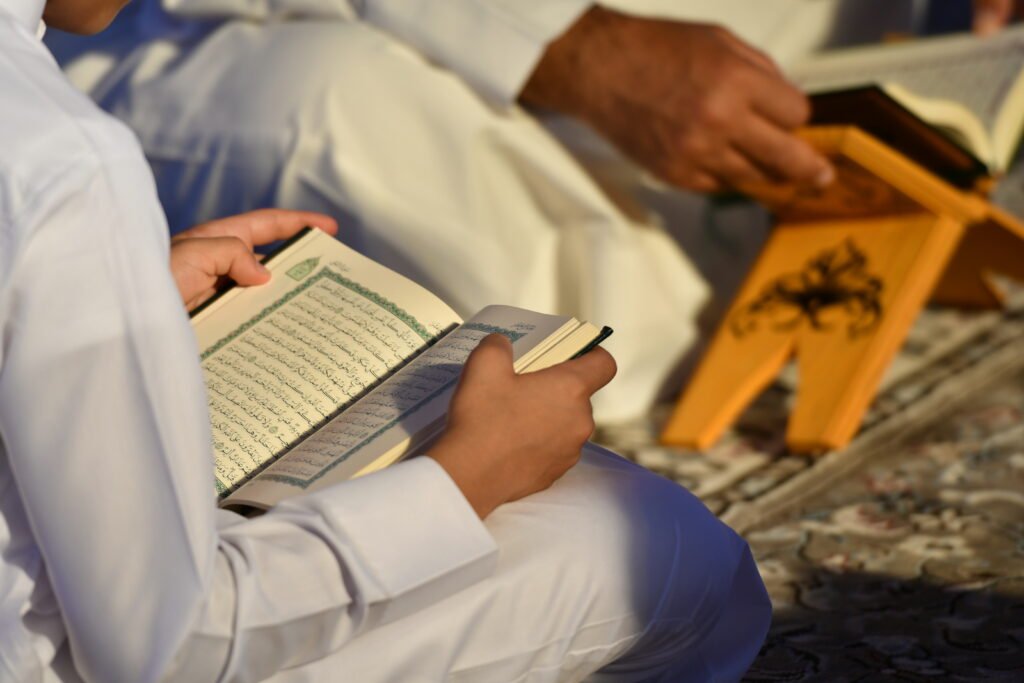
Families who want a flexible and reliable way to learn the Quran, for themselves or for their children, increasingly turn to online teaching. Work, school and long distances often make regular attendance at a mosque circle difficult to sustain, and online lessons bring a qualified teacher into the home.
خيركم من تعلم القرآن وعلمه
“The best of you are those who learn the Quran and teach it.”
Online platforms differ in their curricula, the age groups they serve, their lesson format and the way they follow each student. This guide describes the main kinds of online platforms for learning and memorizing the Quran, names the platforms families most often encounter, presents Noor Elbayan Academy, and sets out how to choose a programme, a teacher and a revision plan.

Why families choose an online platform to learn the Quran
Memorizing the Quran requires continuous follow-up and precise guidance. A structured online programme provides a teacher who listens, corrects and sets a plan, with several practical advantages.
- Flexible lesson times: lessons are arranged around school, work and the family’s time zone, and the timetable is not tied to one location.
- Time and energy saved: there is no journey to a learning centre, so a young child begins the lesson rested and in a familiar room.
- Qualified teachers within reach: a student in Europe or North America can recite to a certified teacher in another country.
- Individual attention: in a one-to-one lesson the teacher hears every verse the student recites, which is not possible in a large circle.
- A supervised setting: parents can remain nearby, hear the recitation improve and take part in the child’s progress.
- Programmes for different levels: a student can begin with the letters and their points of articulation, then move gradually to reading, Tajweed and Hifz.
The main kinds of online Quran platforms
The websites that teach the Quran online do not all follow the same model. Recognising the model helps a family to judge whether a platform suits the student.
- Specialist one-to-one academies: a teacher works with a single student in live lessons, following a personal plan.
- Charitable associations and volunteer recitation circles: Quran memorization societies that have extended their circles to the internet.
- Recitation initiatives linked to major mosques: services for correcting recitation remotely.
- Foundation platforms: programmes built on the Noorani Qaida, which teach the shape and sound of each letter and the vowel marks before Quranic words. This is the first step recommended for young beginners.
- Tajweed platforms: courses that explain classical texts such as Tuhfat al-Atfal and al-Jazariyyah and apply them in recitation.
- Ijazah tracks: programmes for students who have completed their memorization and wish to recite the whole Quran to an authorized teacher. They require an advanced level of Hifz and Tajweed.
- Islamic studies academies: platforms that teach in English or another language for children who do not speak Arabic, with attention to meanings alongside recitation.
- Women-only academies: platforms whose teachers and administration are all women.
- Group circles over video: several students share one session, which encourages mutual motivation while giving each student a shorter individual turn.
- Programmes for new Muslims: lessons in the short Surahs needed for prayer, with a simple explanation of their meanings.
- Self-study applications: digital Mushaf tools and applications that listen to recitation. They are best treated as supporting tools for individual revision and do not replace recitation to a teacher.
Online platforms for learning and memorizing the Quran
The names below are among those families encounter when searching for online Quran teaching. Each is described in one neutral line, in no particular order. Programmes, fees and enrolment conditions change, so the current details should be confirmed with each provider and assessed against the criteria set out later in this guide.
- Quran Web Learning: programmes in memorization, recitation correction and Tajweed for different ages and levels.
- Al Azhar Message: online lessons in the Quran, Tajweed, Arabic and Islamic sciences.
- El Bayan Academy: programmes for learning the Quran, studying Tajweed and improving recitation.
- El Quran Online: online teaching of the Quran and Islamic lessons.
- El Quran Online School: Quran programmes for students who study from home.
- Hedaya El Quran: programmes in Quran learning, Tajweed and Hifz.
- Tahfez Quran: online programmes for memorization, revision and reading.
- Tahfiz Quran: services for learning and memorizing the Quran at a distance.
- Maqra’at Al-Saudia (مقرأة السعودية): a project for teaching the Quran and correcting recitation electronically.
- Maqra’at al-Haramayn al-Sharifayn: a recitation initiative associated with the Two Holy Mosques.
- Maqraa: a platform for Quran recitation to a listener.
- Tartil Online: courses in Quran learning, recitation and Tajweed.
- Tarteel: a service focused on recitation practice.
- Itqan Quran: programmes in memorization, recitation and Tajweed.
- Qurani: a platform that presents Quran lessons for the members of a family.
- Afwah al-Quran Center: a center for correction of recitation and Tajweed.
- Al-Kuttab Online: a platform modelled on the traditional kuttab and its foundation curricula.
- Wartel Academy: an academy that pairs memorization with the meanings of Quranic vocabulary.
- Khayrukum and Maknoon: Quran memorization societies based in Saudi Arabia.
- Al-Furqan Academy: an academy for memorization and the Quranic sciences.
- Zad Academy: an educational platform covering the Islamic sciences more broadly.
- Ayah: a digital Mushaf application with tools for following a daily portion.
The name of a website is not a sufficient basis for choosing it. The programme itself should be reviewed: its lesson length and weekly frequency, its method of memorization and revision, and its suitability for the age and level of the student.
Noor Elbayan Academy
Noor Elbayan Academy teaches Quran memorization, Tajweed and Arabic through live one-to-one lessons of 30 minutes, held over Zoom or Google Meet. It gives particular attention to establishing correct reading for children and beginners before intensive memorization.
- Qualified teachers: the academy’s certified teachers are Azhari teachers with more than ten years of experience, and they include teachers who hold an Ijazah with a connected Sanad.
- A sound foundation: children and beginners start with the Noor Al-Bayan foundation course or the Noorani Qaida, which teach the letters and vowel marks and lead gradually to accurate reading. Children are accepted from age 6.
- Programmes for different needs: Hifz with continuous revision, applied Tajweed, Arabic lessons for non-native speakers and Quran classes for adults.
- Three languages: lessons are given in English, French or Arabic, so that the rules are explained in a language the student understands.
- Follow-up: a report is sent to the family after every lesson.
- A suitable setting for girls and boys: classes are separate, and girls are taught by female teachers.
- Clear terms: the first trial lesson is free, a 7-day money-back guarantee applies, and a make-up lesson is provided when a lesson is cancelled at least six hours in advance. Plans start from $40 per month.
Beyond memorization, the academy offers a route to an Ijazah in recitation with a connected Sanad, and it teaches Aqidah, Fiqh and Seerah to children through its Islamic studies lessons.

Criteria for choosing an online Quran platform
A large number of platforms does not mean that they all offer the same experience. The following criteria allow a family to compare them on the points that affect results.
- Certified teachers: it is not sufficient for a teacher to have memorized the Quran. The teacher should hold an Ijazah with a Sanad connected to the Prophet, peace be upon him, and be skilled in oral instruction.
- Live, interactive lessons: recorded videos give flexibility in viewing time, but recitation and Tajweed require immediate correction of articulation by a teacher.
- A defined curriculum: there should be a clear path from the foundations of reading to accurate recitation and then to Hifz, with set amounts of new memorization, short-term revision and long-term revision.
- Programmes suited to each age: children and adults learn differently. A programme for children should keep the lesson interactive and simple, so that the child does not feel bored or pressured.
- Regular reports: parents need to know the child’s strengths and the points of Tajweed that need improvement at frequent intervals.
- Flexible scheduling: lesson times should fit the family’s routine, with a fair arrangement for rescheduling in an emergency.
- The language of instruction: a child raised outside the Arab world needs a teacher who can explain in a language the child understands.
- Reliable technology: sound and picture quality, screen sharing, an interactive whiteboard and a Mushaf with colour-coded Tajweed rules all support concentration and accurate correction.
- A trial before commitment: a trial lesson allows the family to assess the teacher and the method directly.
Matching the programme to the student’s goal
The right platform is determined by how well its programme matches the needs of the student. It is therefore best to identify the student’s level and goal before enrolling.
- A child or a beginner: choose a programme that concentrates on foundations and correct reading before intensive Hifz.
- Improving Tajweed: a student who already reads the Quran needs a programme that corrects mistakes, the articulation of the letters and the rules of Tajweed. The academy’s guide to Tajweed rules for beginners explains what the teacher corrects.
- Memorizing the Quran: find out how memorization and revision are organised, how many lessons there are each week and how progress is followed. The academy describes its approach on the page for online Quran memorization courses.
- Revising earlier memorization: a student who has memorized parts of the Quran needs a programme built around consolidation.
- Specialised study: for the Qira’at or an Ijazah, check the details of the programme and the level required.
Foundational reading and memorization are different stages
The two stages are sometimes confused. Foundational reading helps the student to recognise the letters and vowel marks and to read words and verses correctly. Memorization concentrates on learning verses and Surahs by heart, with continuous revision and recitation to the teacher. A beginner may need the foundation stage first, while a student with a good basis in reading may begin memorization directly, according to the teacher’s assessment.
How to recognise a skilled teacher
The quality of the teacher matters more than any feature of the platform, because the teacher shapes the relationship between the student and the Book of Allah.
- Ijazah and Sanad: a teacher who has received the Quran through a connected chain is able to teach every letter as it was transmitted.
- Educational skill: children tire quickly. An effective teacher encourages the student, recognises effort and knows when to ask for more and when to lighten the load.
- Correction at every verse: a careful teacher does not allow vowelling mistakes to pass, and explains the general meaning in simple terms.
- Specialisation by age: teaching children calls for patience and constant encouragement, while teaching adults calls for respect and gentle correction of long-standing mistakes.
Traditional circles and online lessons compared
Memorization in mosque circles has great merit and remains dear to Muslim families. The table below summarises how one-to-one online lessons differ in practice.
| Aspect | Traditional circles | One-to-one online lessons |
|---|---|---|
| Scheduling | Fixed in advance | Arranged to suit the family |
| Attention | One teacher for a group of students | One teacher for one student |
| Memorization plan | General, suited to the majority | Set according to the student’s ability and pace |
| Family follow-up | Usually verbal, at the mosque | A written report can be sent after each lesson |
| Location | Limited to the neighbourhood or city | Available from any country |
Revision: the basis of lasting memorization
Many students memorize, and fewer retain. A sound programme measures success by what remains firm in the student’s memory, not by the number of pages covered in a month. The academy’s approach to revision and consolidation divides the work into major revision of older portions, minor revision of the previous week and new memorization for the day. Four habits between lessons strengthen the result.
- Listen repeatedly: hear the daily portion from an accurate reciter several times before memorizing it.
- Link the verses: understand the subject of each verse and connect its ending to the beginning of the next. Some families also use mind maps for Quran memorization.
- Use one Mushaf: keep to the same edition, because visual memory retains the position of each verse on the page.
- Keep a fixed time: a short daily session at the same hour achieves more than occasional long ones.
Preparing the home and the child for online lessons
- Set aside a place: choose a quiet corner free of toys, television and other distractions.
- Check the equipment: a stable internet connection, a computer or tablet and a headset are sufficient. The camera should remain on so that the teacher can see the student’s mouth.
- Respect the appointment: treat the lesson as firmly as one attended in person. Clean, tidy clothes, as if going to the mosque, build respect for the Quran.
- Review before the lesson: spend ten minutes hearing what the child memorized the previous day.
- Encourage at home: reinforce the teacher’s praise with kind words or a small reward.
How to begin with Noor Elbayan Academy
- Book the free trial lesson: the teacher assesses the student’s level and decides the starting point.
- Choose a time: select lesson times that suit the family’s time zone.
- Agree a plan: clear amounts of memorization and revision are set for the student.
- Begin lessons: the student joins the teacher for 30-minute live lessons.
Families can book a free trial lesson or contact the academy on WhatsApp.
Frequently asked questions
At what age can a child begin online Quran lessons?
Noor Elbayan Academy accepts children from age 6. Lessons begin with a reading foundation, the Noorani Qaida or the Noor Al-Bayan method, together with short Surahs, so that correct pronunciation is established before intensive memorization.
Is online Quran teaching as effective as teaching in person?
It can be. In a live one-to-one lesson the teacher works with a single student throughout, and every mistake is heard and corrected at once. The outcome depends on the teacher’s skill and on the student’s consistency.
How many lessons a week should a child attend, and for how long?
No single frequency suits every child. Short lessons held several days a week are preferable to long sessions, and the schedule should be one the child can keep regularly. Lessons at Noor Elbayan Academy last 30 minutes.
Can an adult learn the Quran from the beginning, without prior Tajweed?
Yes. A beginner starts with the letters and reading words, and the Tajweed rules are then introduced gradually. In live lessons the student listens to the teacher, recites and receives immediate correction.
How long does it take to memorize the whole Quran online?
The period varies with the daily amount, the student’s age and ability, the number of lessons and commitment to revision. The teacher sets a plan suited to the individual. Accuracy and continuous revision matter more than speed.
Are there online Quran programmes for women and girls?
Provision differs from one platform to another, so each website should be checked for female teachers. At Noor Elbayan Academy, classes are separate and girls are taught by female teachers.
What should a parent do if a child is reluctant to sit in front of the screen?
This difficulty is common at the beginning. It is usually resolved by a teacher with strong educational skills, who uses stories and encouragement to put the child at ease, and by a settled routine at home.
Does Noor Elbayan Academy grant an Ijazah?
Yes. A student who has memorized the whole Quran with proficiency recites a complete reading to the teacher and is granted an Ijazah with a Sanad connected to the Prophet Muhammad, peace and blessings be upon him.