 Noor Elbayan Academy
Noor Elbayan Academy’s Approach to Online Quran Memorization

Noor Elbayan Academy teaches children to read and memorize the Quran through online learning. Its approach aims at a complete and effective learning experience that uses modern technology to make Hifz easier while giving attention to the child’s spiritual and moral development. The main features of this approach are set out below.
A flexible teaching method
Flexibility is one of the foundations of the academy’s work. The aim is to meet the needs of different children and to suit each child’s way of learning.
- Individual lessons. Each student’s level is assessed individually, and lessons are designed to match the child’s needs and abilities. Lessons are one-to-one and last 30 minutes.
- Learning from any place. Children learn from home or from any place with an internet connection, which removes the limits of geography.
- Varied methods. Lessons draw on video, audio and interactive material to strengthen understanding.
- Continuous support. Students can ask their teacher questions, and progress is followed regularly so that the teaching can be adjusted when needed.
- An encouraging atmosphere. Children are encouraged to take part and to ask questions without fear of failure.
- Constructive feedback. Regular comments show students their strengths and weaknesses and the areas that need more work.
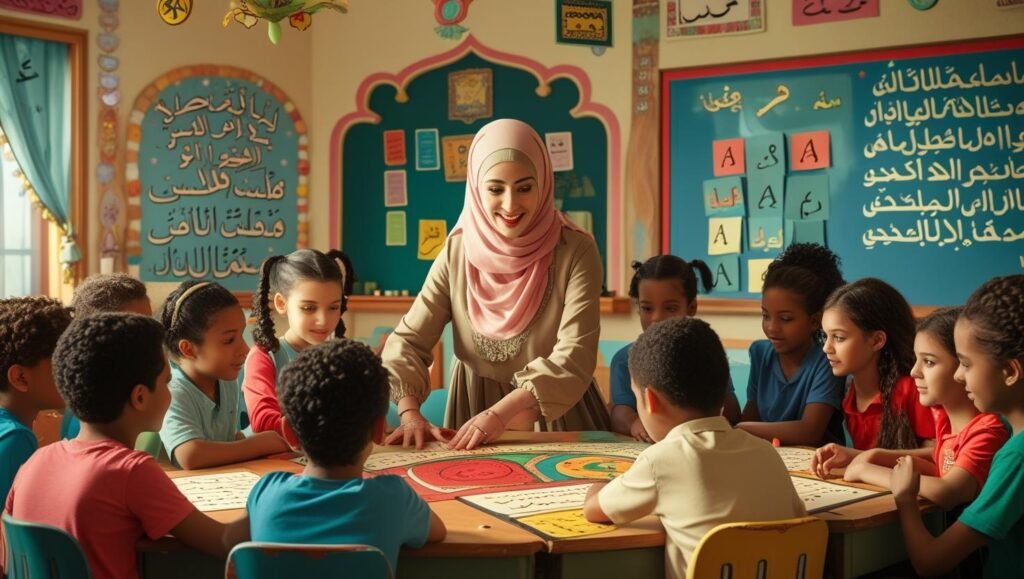
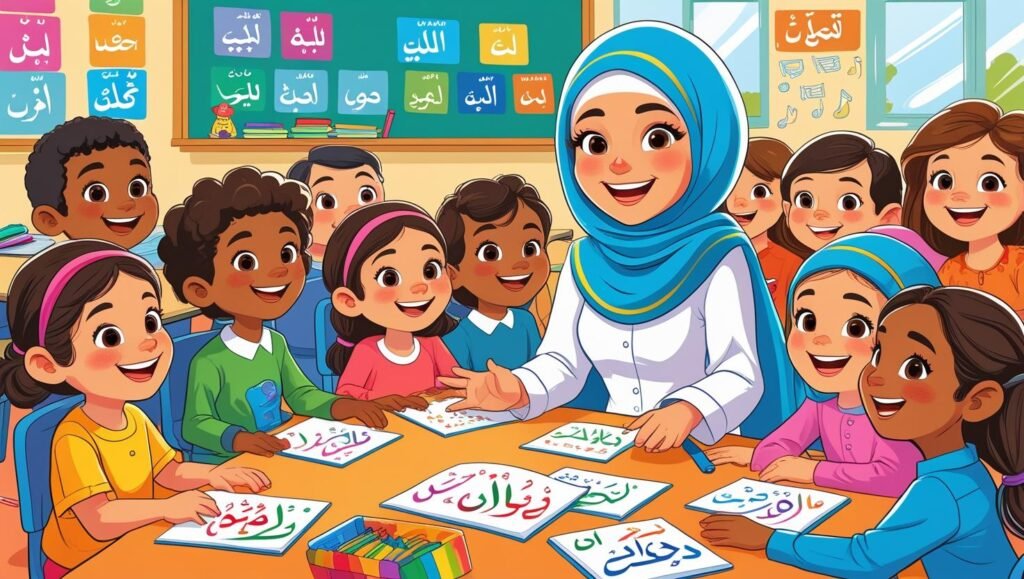
Memorizing the Quran also strengthens a child’s Arabic. The Noorani method is used to teach letters and words, and lessons give attention to Tajweed and writing. The Quran is the main reference throughout, and children can apply what they learn at school and at home.
The use of technology
Technology improves the learning experience and brings teacher and student closer together.
- Live lessons. Lessons are held live over Zoom or Google Meet, so the student interacts with the teacher in real time and receives immediate answers to questions.
- Audio and visual content. Sound and image are used to teach how the Quran is read and recited with Tajweed, which helps children absorb the material.
- Following individual progress. Each student’s progress is tracked individually, and the teaching is adjusted according to performance.
- Continuity. Online learning allows lessons to continue in all circumstances, so the child’s progress is not interrupted.
A balanced education
The academy seeks to combine the spiritual, educational and moral sides of learning so that the child’s character develops as a whole.
- Values and character. Children are taught Islamic values such as honesty, trustworthiness and respect, and how to apply them in daily life.
- Empathy and tolerance. Children learn to understand the feelings of others and to deal with people in a positive manner.
- Active participation. Interactive lessons deepen understanding and develop the ability to think and to analyse.
- A positive setting. Children are encouraged to express their thoughts and feelings.
- An enjoyable experience. Lessons are made enjoyable so that children remain motivated.
- Planning. Children learn the importance of setting goals and working towards them.
Interaction and participation
- Asking questions. Students have every opportunity to ask questions, which clarifies unclear points and deepens understanding.
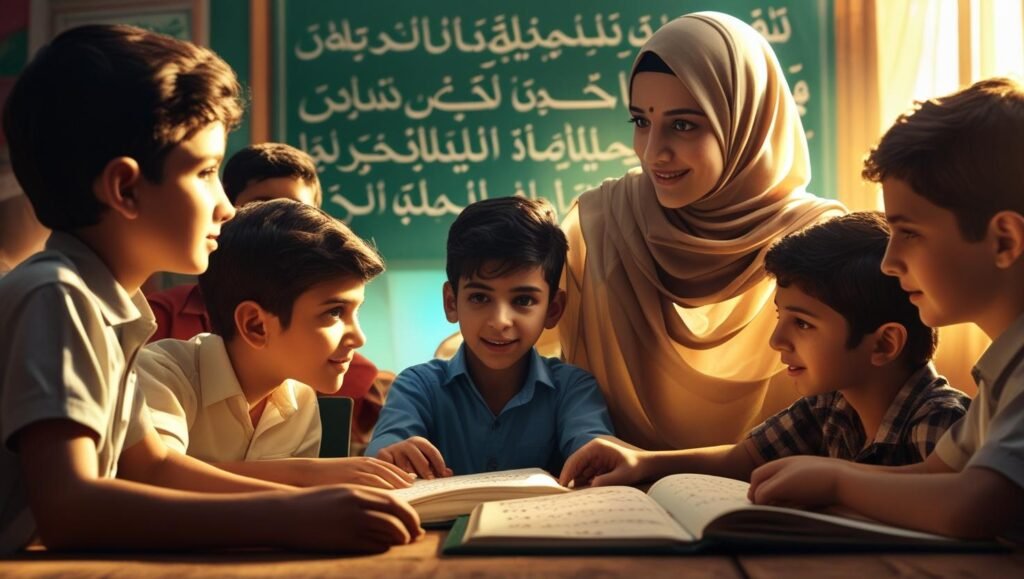
- Real-time interaction. In a live lesson the teacher responds immediately, which encourages active participation.
- Discussion. Talking with the teacher about the themes of the verses widens the child’s understanding.
- Confidence. Regular participation develops the child’s ability to express ideas with confidence and to take the initiative.
- Parents. Parents receive regular updates on their child’s progress, which strengthens the link between the academy and the family.
Learning to read and write is a basic step in a child’s future. The academy’s programme joins Quran memorization with Arabic, so that children understand letters and words, apply the Noorani rules with ease, and learn to write letters and words correctly. Correct reading and Tajweed in turn allow them to recite the Quran with understanding.
Continuous assessment
Continuous assessment improves the teaching, follows the student’s progress and directs support where it is needed.
- Following individual progress. Regular assessment measures progress in memorizing and understanding the Quran and identifies strengths and weaknesses.
- Feedback. Prompt comments give students clear direction on how to improve.
- Goals. Assessment helps students set clear personal goals and follow their progress towards them, which gives a sense of achievement.
- Adjusting the teaching. Results are used to adapt the lessons and to find the methods that work best for each student.
- A full picture. Assessment covers understanding, memorization and application.
- Responsibility. Knowing their own strengths and weaknesses encourages students to take responsibility for their learning and to direct their efforts.
- Reports to parents. A report is sent after every lesson, and parents can use it to help their child reach the goals set.
Cooperation with parents
Parents are encouraged to take part in their child’s learning by supporting revision at home. They can also contact the teacher for updates on progress and on any difficulty the child faces.
Memorization strategies
The following strategies make memorization easier and improve the child’s ability to retain and apply the text of the Quran.
- Repetition. Verses are repeated regularly so that they settle in the memory.
- Dividing the text. Verses are divided into short sections and memorized gradually, without pressure.
- Understanding the meaning. Understanding a verse before memorizing it makes it easier to remember.
- Visual aids. Diagrams or mind maps can be used to clarify meanings.
- Listening. Audio and video recitations help students to understand and apply the text.
- Personal goals and encouragement. Students set clear personal goals for memorization, and encouragement for progress motivates them to continue.
- Practice. Students are encouraged to recite what they have memorized in prayer, which fixes the verses and brings them into daily life.
- Recording. Students can record their own recitation and listen to it in order to review and improve their performance.
- Memory techniques. Mental association and forming an image in the mind help in recalling verses.
- Traditional and modern methods together. A combination of both is used and adapted to the needs of each student.
- Family support. Parents can share in the memorization, which helps the child reach the goals set.

An encouraging learning environment
- Confidence. Continuous support and encouragement build students’ confidence.
- A positive view of mistakes. Mistakes are treated as part of learning, so students try without fear.
- Freedom from pressure. Students should feel at ease when expressing their thoughts and views.
- Attentive teachers. Teachers respond to the individual needs of each student, which builds trust.
- Recognition. Individual achievements are acknowledged, and regular positive comments maintain motivation.
- Good values. Respect, cooperation and helping others are encouraged.
Encouraging creativity and independent thinking
- Questions and enquiry. Teachers encourage students to ask about the verses they study, which develops careful thinking.
- Personal projects. A child may prepare a short presentation, make an educational poster or write a piece related to the Quran, which develops research skills and allows personal expression.
- Creative activities. Art and creative writing can be used to teach moral and social values and to deepen the child’s understanding of Islamic values.
- Initiative. Children are encouraged to learn independently and to explore new ideas.
- Positive feedback. Appreciation of effort motivates children to continue.
Summary
The academy’s approach to online memorization offers children a complete and flexible way of learning the Quran that takes account of their spiritual, moral and personal development. Reading, Tajweed and Arabic are taught together, since a sound knowledge of the letters makes memorization easier and opens the meanings of the Quran to the child.
A further article describes how Noor Elbayan Academy teaches students the foundations of correct memorization through the Noorani method, which joins theory and practice. The aim is a generation that values the Quran and recites it correctly.
Parents who wish to choose a suitable course or arrange a free trial lesson may contact Noor Elbayan Academy.