 Noor Elbayan Academy
Giving Your Child a Strong Foundation in Arabic Language
Teaching children language, reading and writing is one of the foundations that preserve their cultural and religious identity. Language is more than a means of communication; it is part of who a person is. When children learn the language of their heritage, they are able to understand that heritage, and their sense of belonging grows stronger.
Reading and writing open the doors of knowledge and help children express their thoughts and feelings. By learning the Quran in correct Arabic, children also acquire the moral and religious values that shape their character and help them meet the cultural challenges of a globalised age.
The Noor Al-Bayan method is a well-established way of teaching children the basics of Arabic, reading and writing. It uses engaging techniques and educational games to build vocabulary, listening and speaking, so that learning becomes enjoyable rather than a duty, and its focus on the Quran nurtures faith alongside language.
How the Quran, reading and writing shape mind and spirit
The effect of learning the Quran
- Spiritual understanding: the Quran deepens spiritual awareness and strengthens the bond with Allah, giving children a sense of reassurance and inner peace.
- Values and character: its verses carry moral values that shape children’s behaviour and direct it towards good.
- Critical thinking: reflecting on the meanings of the verses encourages analysis and broadens the mind.
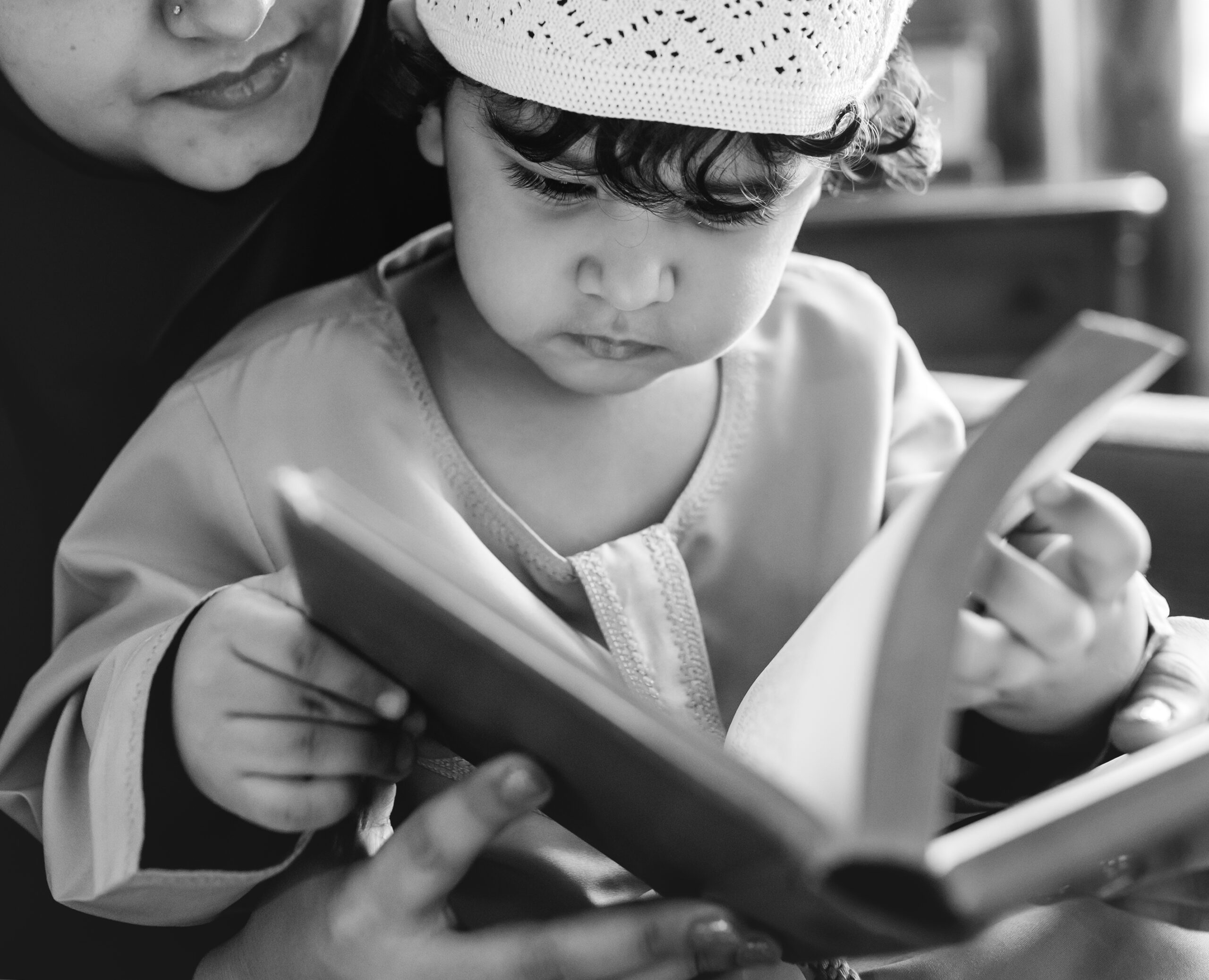
The effect of reading
- Wider knowledge: reading increases what children know in many fields and strengthens logical thinking and problem solving.
- Imagination: stories and literature develop imagination and creativity.
- Language skills: reading builds vocabulary and grammar, so children express themselves better.
The effect of writing
- Organised thinking: writing trains children to arrange their ideas and state them clearly.
- Creativity: it encourages children to express their thoughts and feelings.
- Self-confidence: children gain confidence as they put their views and experiences into words.
Together, these three elements strengthen cultural and religious identity and develop both mind and spirit, helping to form a well-rounded personality.
How the Noor Al-Bayan method teaches reading and writing
The Noor Al-Bayan method adopts effective and accessible techniques for teaching Arabic and the Quran, which allow children to acquire reading and writing skills relatively quickly. Parents who would like help choosing a suitable course may contact Noor Elbayan Academy, and a separate article explains how to choose a Noor Al-Bayan course that fits a child’s needs.
Focus on letters and sounds
The method begins with the letters of the alphabet and their sounds, which prepares the way for forming words later.
- Letters taught individually: each letter is introduced on its own, with attention to its shape and sound, using flashcards and visual models.
- Sounds: once the letters are recognised, the sound of each is taught through repetition and sound games.
- Blending: children learn to join sounds into words and are encouraged to pronounce them correctly and repeatedly.
- Interactive activities: chants, letter games and short stories built around basic words make learning enjoyable.
- Encouragement: teachers praise and reward progress, which builds confidence.
- Regular review: letters and sounds are revisited periodically so that knowledge is secure before moving on.
Gradual progression
The method starts with the basics and moves step by step towards harder material, so the child absorbs information without feeling overwhelmed.
- Starting from the basics: letters and sounds are presented simply to lay a firm foundation.
- Moving to words: after mastering the letters, children read simple words.
- Increasing difficulty: more complex words and sentences follow, introducing new sounds and structures gradually.
- Repeating acquired skills: every stage reviews earlier skills and applies them in different contexts.
- Practical exercises: exercises suited to each stage reinforce learning through application.
- Engaging with the content: children are encouraged to ask questions about what they read.
- Monitoring progress: progress is assessed regularly to confirm readiness for the next stage, and additional support is given where needed.
Repetition and continuous review
- Repeating lessons: a new lesson is taught several times in varied ways, which deepens understanding.
- Scheduled review: set times are reserved for earlier lessons, sometimes through games and interactive activities.
- Varied techniques: listening, writing and educational games keep review interesting.
- Different contexts: words and sounds are presented in different sentences and stories to widen understanding.
- Periodic assessment: regular checks identify the areas that need more attention.
- Review at home: children are encouraged to go over what they have learned with their parents.
- Memorization: review is also used to memorize short verses and new words, so that learning is put to use.
Interactive techniques
- Educational games: letter and word games motivate children to learn.
- Hands-on activities: drawing, cutting and pasting allow children to use letters and words in simple art projects.
- Learning through play: stories and chants help children connect and remember information.
- Reading aloud: reading aloud builds fluency and confidence.
- Technology: educational applications and videos provide visual and audio content that supports understanding.
- Parental involvement: parents are encouraged to take part in learning activities, which strengthens family bonds and motivation.
Combining memorization with application
- Memorizing verses and words: children regularly memorize short verses of the Quran and new vocabulary.
- Practical use: they then recite the verses or use the new words in sentences of their own.
- Stories: stories that include the memorized verses or words help children grasp their meaning.
- Simple checks: children are asked about what they have memorized and what it means.
- Connection to daily life: teachers encourage children to relate what they memorize to their own experience.
- Sharing: reciting to family members builds confidence.
Supporting learning at home
A supportive home environment reinforces what children learn in their lessons. Parents can help in the following ways:
- Establish a routine: a regular schedule for lessons and review makes learning part of daily life.
- Provide resources: books, educational games, flashcards and writing materials offer varied ways to learn.
- Review lessons: read the verses or words together and ask questions that encourage thinking.
- Set aside a study space: a quiet, suitable place helps the child concentrate.
- Use interactive methods: games and hands-on activities support learning through play.
- Encourage conversation: invite the child to express ideas and discuss what has been learned.
- Offer rewards and support: simple rewards for progress strengthen motivation.

Wider benefits of Noor Al-Bayan and Quran learning
- Language skills: reading and writing improve, along with vocabulary and grammar.
- Concentration: structured learning trains attention, which carries over to other tasks.
- Critical thinking: reflecting on verses and their meanings develops reasoning.
- Memory: memorizing verses and words strengthens recall, which benefits other subjects.
- Values and character: learning the Quran nurtures moral and spiritual values and positive behaviour.
- Self-confidence: progress and successful memorization raise the child’s confidence in every area.
- Independent learning: looking up meanings and applying what is learned develops independence.
Suitability for young children
Children in early childhood are able to learn with the Noor Al-Bayan method, because it was designed for their age and level of understanding:
- Simple style: the teaching approach is simple and enjoyable.
- Interactive activities: games and activities keep young children engaged.
- Letters and sounds first: this starting point matches what children of this age can absorb.
- Repetition and review: constant review fixes information firmly.
- Encouraging environment: support from parents and teachers motivates the child.
- Adaptability: activities and content can be adjusted to each child’s level.
A Noor Al-Bayan course takes children from letters to forming sentences and understanding meanings, and encourages them to speak and interact in the language of the Quran, which builds their confidence and ability to express themselves.
Measuring a child’s progress
- Follow daily progress: note what is covered in each session, what the child does well and what needs improvement, and ask the child to explain what was understood.
- Assess reading: listen to the child read Quranic text and observe fluency and accuracy of pronunciation.
- Assess writing: ask the child to write some verses or new words.
- Use short quizzes: brief periodic quizzes can cover what has been learned.
- Review basic concepts: simple questions confirm that the child understands the basics of Tajweed and meaning.
- Motivate and reward: acknowledge each achievement positively.
- Speak to the teacher: the teacher can give a considered assessment of the child’s level and progress.
- Set goals: agree short-term and long-term goals with the child and measure progress towards them.
These steps reveal the child’s strengths and weaknesses and allow parents to direct learning more effectively.
Not only for Arabic speakers
The Noor Al-Bayan method is not limited to native speakers of Arabic. It benefits children of different ages and language backgrounds, including speakers of English and other languages, and it teaches Arabic and the Quran in an interactive way that suits children who are learning Arabic as a new language.
Educating children is a journey that shapes their character. The primary years are among the most important, because the foundations are laid then and skills developed early continue to grow for life. Noor Elbayan Academy teaches through live one-to-one lessons with certified Azhari teachers and offers a free trial lesson; families may contact the academy for further information.