 Noor Elbayan Academy
Best Quran Memorization Website for Kids: How to Choose
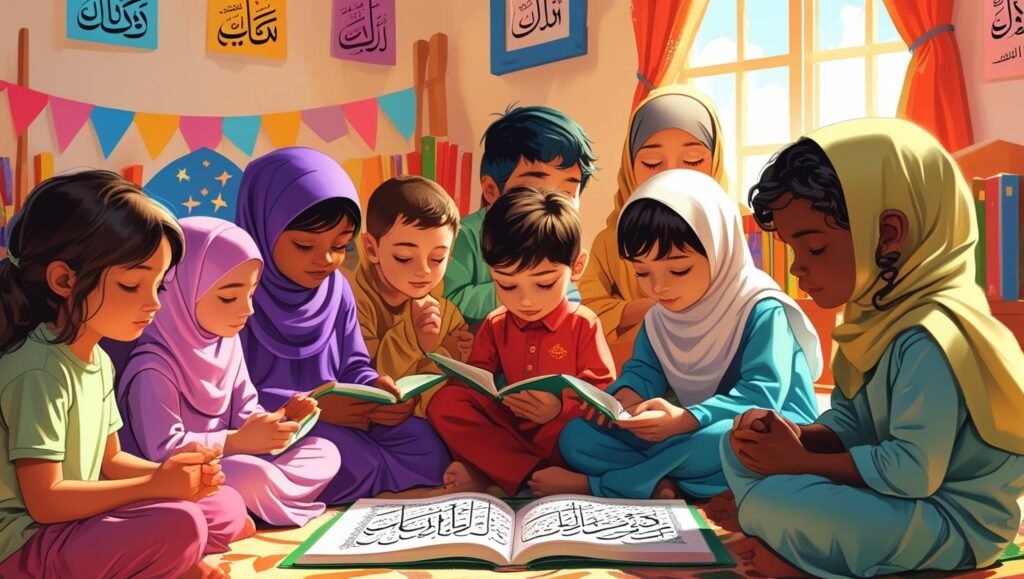
Choosing a Quran memorization website for a child is a decision that shapes how the child relates to the Quran for years to come. This guide explains why an early start matters, which features distinguish a strong website, how free and paid options compare, and how parents can keep a child committed to the programme.
Why early Quran memorization matters
Hifz at a young age is far more than the learning of a text. It is an investment in the character, intellect and faith of the child.
- Religious and moral values: early memorization lays a firm foundation of honesty, trustworthiness, mercy and justice, which shapes the personality of the child in a positive way.
- Memory and concentration: regular memorization trains the memory and strengthens the ability to focus and absorb, which supports learning in general.
- Arabic language: children who memorize the Quran are exposed intensively to classical Arabic, which improves their vocabulary and their understanding of meaning.
- Spiritual connection: memorization nurtures a love of worship and encourages constancy in prayer and daily recitation.
- Patience and discipline: Hifz requires steady effort, and that effort builds a sense of responsibility.
- Blessing in life: in Islamic teaching, memorizing the Quran brings blessing to the life of the child, in seeking knowledge and in dutifulness to parents.
- Motivation to excel: the sense of achievement that comes with each Surah encourages the child to do well in other areas.
Features of the best Quran memorization websites for children
Parents comparing websites should look for the following features. Together they indicate a programme designed around the educational and religious needs of children.
A graded curriculum suited to the age of the child
The website should offer clear levels, moving from short Surahs to longer ones, with the Quran divided into small portions so that each child progresses according to ability.
Memorization combined with understanding
A complete curriculum pairs Hifz with a simplified explanation of the verses and the meanings of their words, at a level the child can follow. Some programmes also include Tajweed, correct reading, and lessons in Islamic manners.
Qualified teachers and live interaction
Teachers who specialise in teaching the Quran to children, and who assess and guide each child continuously, are the most important feature. Live lessons allow the child to ask questions and to be corrected at once.
Clear, accurate recitation
Children learn pronunciation by listening. The recitation they hear, whether from the teacher or from recordings, must be clear and precise so that they acquire correct articulation and Tajweed.
Engaging teaching methods
Educational games, audio exercises, short videos and Quranic stories keep young learners interested. The process should be enjoyable enough to sustain the motivation of the child.
Assessment and follow-up
Short tests, regular revision and periodic reports show parents how far the child has progressed and which portions need more work.
Support for parents
A good website gives parents a direct channel to the teacher, so that they can receive observations on performance and advice on how to help at home.
Language options
Children who do not speak Arabic at home benefit from teaching and explanation in a language they understand.
Flexibility of time and place
Lessons should be accessible from a computer, tablet or phone, at times that suit the family schedule.
Reasonable cost
Parents should compare what each website charges with what it provides, and choose the option that offers good value within the family budget.
Reviews and recommendations
The experience of other parents gives a useful picture of the quality of teaching and service.

What Quran apps and programmes for children offer
Alongside teacher-led websites, many mobile apps and programmes support memorization. They differ in detail, but the useful ones tend to share a small set of functions. Parents can choose according to the needs of the child and how the child responds to technology.
- Verse repetition: clear recitation with the option to repeat a verse many times, often with a choice of reciters.
- Tajweed mode: simplified guidance on the letters and vowel marks, sometimes with colour coding.
- Recording and comparison: the child records a recitation and compares it with a correct one.
- Revision tools: reminders and review features for Surahs already memorized.
- Translation: verses displayed with their meaning in several languages, which helps children who are not native Arabic speakers.
- Game elements: points, challenges and virtual rewards on completing verses or Surahs.
- Foundations: lessons in the Arabic alphabet and Quranic letters, taught through play and audio repetition, in the manner of the Noor Al-Bayan method.
An app is a useful supplement. It does not replace a teacher who listens to the child and corrects mistakes.
How websites make Quran memorization easier for children
- Interactive learning: games, activities and exercises make memorization attractive, so children remain committed.
- Repetition of recitation: hearing the correct pronunciation repeatedly reinforces Hifz.
- Learning at any time and from any place: access from a computer or mobile device gives families flexibility in managing time.
- Simplified video explanation: short videos that explain the verses help children memorize through understanding.
- Correct Tajweed: tools and lessons devoted to Tajweed improve articulation and recitation in general.
- Contact with specialist teachers: the child receives personal support and direct guidance when a verse proves difficult.
- Progress tracking: parents and teachers can see whether the child is advancing well or needs additional help.
- The basics of the letters: simplified lessons in the Arabic letters build a sound foundation in reading before memorization begins.
- Quranic stories: stories of the Prophets raise interest and help children connect what they memorize with its lessons.
- Learning alongside peers: some websites offer group study, which can motivate certain children through healthy competition.
The role of Noor Elbayan Academy teachers
At Noor Elbayan Academy, children learn in live one-to-one lessons of 30 minutes with certified Azhari teachers. The teacher does considerably more than hear the lesson.
- Direct guidance and supervision: the teacher follows the progress of the child, helps with any difficulty in memorization or understanding, and gives personal advice on effective revision.
- Correct pronunciation: the teacher listens to the recitation of the child and corrects mistakes in the letters as they occur.
- Explaining meanings: verses are explained simply, at the level of the child, and questions are answered, so that memorization is linked to understanding.
- Teaching Tajweed: the basic rules, such as the lengthening (madd), nasalisation (ghunnah) and the rules of stopping, are taught and practised.
- Encouragement: the teacher praises effort and keeps the enthusiasm of the child alive.
- Regular revision: memorized portions are reviewed regularly, and the teacher identifies the verses that need more practice.
- Emotional support: a positive relationship with the teacher builds confidence and reassures the child during difficult stages.
- Reports for parents: parents receive a report after every lesson, with precise observations on performance and on the areas that need improvement.
Lessons take place over Zoom or Google Meet and are available in English, French and Arabic. Girls are taught by female teachers in separate classes, and every family may begin with a free trial lesson.
Tips to keep children committed to their Quran lessons
- Make memorization enjoyable. Choose interactive methods, and link the verses to the stories of the Prophets.
- Set realistic goals. A short Surah or a few verses each week gives the child a sense of achievement. Mark each small goal with a modest reward or a word of appreciation.
- Follow up and encourage. Review progress regularly with the teacher, and praise the child even when progress is slow. Attention to what is going well builds confidence.
- Share time with the Quran. Set a daily time to read with the child, however brief, and encourage the rest of the family to take part.
- Use assessment. Short tests and periodic review show how much has been retained.
- Vary the method. Alternate between listening, reading with repetition, and explanatory videos, and let the child revise with siblings or relatives.
- Provide a calm setting. Fix a daily time for memorization in a quiet place, away from distractions.
- Link memorization to its reward. Speak with the child about the reward promised to those who memorize the Quran.
- Be patient. Children meet difficulty at times. Encourage steady revision instead of rapid memorization, and explain that revision is what makes Hifz firm.
- Prefer live lessons. Direct interaction with a specialist teacher, who answers questions immediately, increases commitment.
Modern technologies used on Quran websites for children
Quran websites rely increasingly on technology to make learning more interactive. The main tools are the following.
- Artificial intelligence: some platforms analyse the progress of the child and adjust the content to the current level, or give automatic feedback on recitation.
- Voice recognition: the system listens to the recitation and identifies the letters or verses that need improvement.
- Educational games and virtual rewards: levels and challenges make memorization more engaging.
- Augmented reality: a few platforms present letters, vowel marks or illustrations linked to the verses in an interactive visual form.
- Video and animation: videos show how verses are read with Tajweed, and animation is used to tell Quranic stories.
- Mobile apps and reminders: children can revise anywhere, and notifications help them keep to their memorization times.
- Live lessons: the child recites to a teacher in real time and is corrected immediately.
- Interactive tests: a short test after each portion shows what needs further revision.
- Messaging and discussion spaces: children and parents can contact the teacher when a difficulty arises.
- Performance records: detailed reports show what has been memorized and what requires review, and the child can look back over earlier progress.
Technology supports the teacher. Automatic correction is helpful for practice between lessons, but a qualified teacher remains the reliable judge of recitation.

Free and paid Quran memorization websites compared
| Aspect | Free websites | Paid websites |
|---|---|---|
| Cost | No fee, which suits families who want content without financial commitment. | A monthly or annual subscription gives access to the full programme. |
| Quality of content | Lessons may be loosely organised, limited to certain Surahs, or not updated regularly. | Organised, professional lessons covering Tajweed, simplified explanation and revision. |
| Interactive features | Simple quizzes or games. Live revision and immediate correction are usually absent. | Live lessons with a teacher, more developed activities and motivating challenges. |
| Technology | Basic functions such as listening to recitation or learning the letters. | May include voice recognition or other tools that assess recitation. |
| Teacher support | The child learns independently. Help is limited to question pages or forums. | Direct support from professional teachers, personal follow-up and detailed reports for parents. |
| Range of content | Often restricted to short Surahs or Juz Amma, with no advanced lessons in Tajweed or Fiqh. | Comprehensive courses that may cover Tajweed, Fiqh, explanation of the verses and Quranic stories. |
| Audio and visual experience | Simple audio recitation and static illustrations. | Richer material, including instructional videos and animation. |
| Revision and follow-up | Limited, and seldom directed by a teacher. | Continuous revision, with progress followed over time. |
| Advertising | Advertisements may distract the child, and extra paid services may be promoted. | Usually free of advertising, with no unexpected additional purchases. |
Free websites suit families looking for simple content with no financial commitment, though they often lack teacher supervision and structured progression. Paid websites offer a complete and professional experience, with continuous support from teachers, which makes them the stronger choice for families who want thorough and lasting Hifz.
Choosing the right website for a child
The best Quran memorization website for children is the one that combines a graded curriculum, a qualified teacher who listens and corrects, engaging methods, and clear reporting to parents. Noor Elbayan Academy is built on these principles: one-to-one live lessons, Azhari teachers with more than ten years of experience, a report after every lesson, and a free trial lesson so that parents can judge the teaching before they commit.