 Noor Elbayan Academy
Benefits and Innovative Ways of Teaching Children the Quran
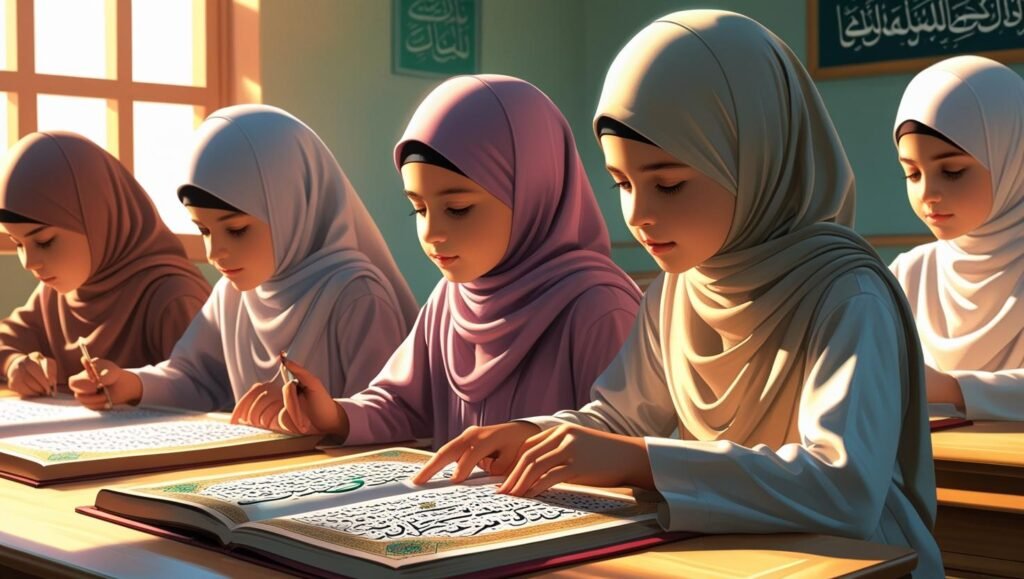
Teaching children the Quran develops far more than memorization. It shapes character, strengthens Arabic, trains the memory and gives the child a secure sense of identity. Learning is most effective when it is varied and enjoyable, adapted to the age and needs of each child, and supported by parents who read with their children and fill the home with the language of the Quran.
Benefits of teaching children the Quran
1. Developing moral values
Learning the Quran has a deep effect on a child’s values and behaviour:
- Core values: the Quran teaches honesty, trustworthiness, justice and kindness, and children’s characters are formed around these principles.
- Mercy and tolerance: the stories of the Prophets teach children to treat others with compassion.
- Responsibility: children learn that every person is accountable for their actions, which helps them make sound decisions.
- Good manners: helping others, respecting elders and caring for those who are younger become habits.
- Moral identity: children come to recognise right and wrong according to the values of Islam.
- Critical thinking: learning the meanings of verses encourages analysis and reflection.
- Self-confidence: holding to Quranic values makes children more confident in facing challenges.
2. Improving Arabic
Quran learning is also a powerful means of developing a child’s Arabic:
- Rich vocabulary: memorizing verses introduces new words and their meanings.
- Grammar and morphology: children absorb sentence structure naturally through reading the Quranic text.
- Pronunciation: correct recitation and Tajweed train children to articulate every letter properly.
- Reading and writing: reading the Quran makes other texts easier to read.
- Comprehension: studying the meanings of verses teaches children to analyse a text and draw out its meaning.
- Written expression and creativity: children draw on Quranic vocabulary, expressions and stories in their own writing.
3. Strengthening memory
- Memorizing text: learning verses by heart exercises both short-term and long-term memory and improves recall.
- Daily repetition: reciting what has been memorized renews it in the memory and makes it easier to retrieve.
- Concentration: Quran learning demands focus and attention, which benefits every other area of study.
- Memorization techniques: children learn methods such as dividing verses into small parts.
- Deep understanding: verses whose meanings are understood are easier to remember.
- Confidence: success in memorizing encourages children to take on other learning challenges.
4. Reinforcing cultural and religious identity
- Religious values: the fundamental values of Islam become part of the child’s personality.
- Islamic history: the stories of the Prophets and the events related in the Quran give children a sense of belonging to their heritage.
- Arabic as a bond: knowing Arabic deepens the child’s connection to faith and culture.
- Manners and conduct: children learn the etiquette that the Quran teaches and are encouraged to act on it.
- Pride in identity: children know who they are as Muslims and present a positive image of their religion.
- Social responsibility: the Quran encourages doing good and helping others, which builds a sense of duty towards the community.
5. Providing a sense of reassurance
- Inner peace: the verses carry meanings of tranquillity that ease anxiety and tension.
- Moral guidance: a firm moral foundation makes it easier to choose rightly and to feel secure.
- Spiritual support: in difficult moments children can return to what they have learned from the Quran.
- Family bonds: when a family learns the Quran together, children feel loved and supported.
- Supplication: children learn to make dua and to ask Allah for help, knowing that He is always with them.
- Acceptance and contentment: verses about the decree of Allah teach children to be content, which reduces fear of the future.

Innovative ways of teaching children the Quran
Interactive applications
Applications that play Quran recitation, with the option to repeat and listen again, help children improve their pronunciation and understanding of the verses.
Educational videos
Visual content that explains the meanings of the Quran, with animation to simplify the ideas, holds children’s attention and supports understanding.
Educational games
Memory games for recalling verses and quizzes that test understanding make learning enjoyable.
Online lessons
Distance learning allows children to study the Quran with qualified teachers and to receive individual support.
Quranic stories
Telling the stories of the Prophets and the events of the Quran in an engaging way fixes information in the mind and deepens understanding.
Nasheeds
Islamic nasheeds that include verses of the Quran can make memorization easier and more pleasant.
Learning by practice
Children can be encouraged to apply what they have learned through simple projects and friendly challenges related to the Quran, and through reciting verses aloud.
Learning with others
Children who learn alongside siblings or friends learn from one another and encourage each other to continue.
Used together, these methods keep children interested in the Quran and its teachings and make learning both enjoyable and effective.
Noor Elbayan Academy
Noor Elbayan Academy teaches children the Quran online through one-to-one live lessons with certified Azhari teachers. Its programmes support the development of moral values, Arabic and memory, with regular recitation and memorization in every lesson and clear learning goals for each age. A report after every lesson keeps parents informed of their child’s progress.
Contact the academy to find the most suitable course for a child. Noor Elbayan Academy is committed to helping children memorize the Quran in a clear and engaging way that builds a love of reading and learning from an early age.