 Noor Elbayan Academy
Benefits of the Noor Al-Bayan Method for Teaching Children Online
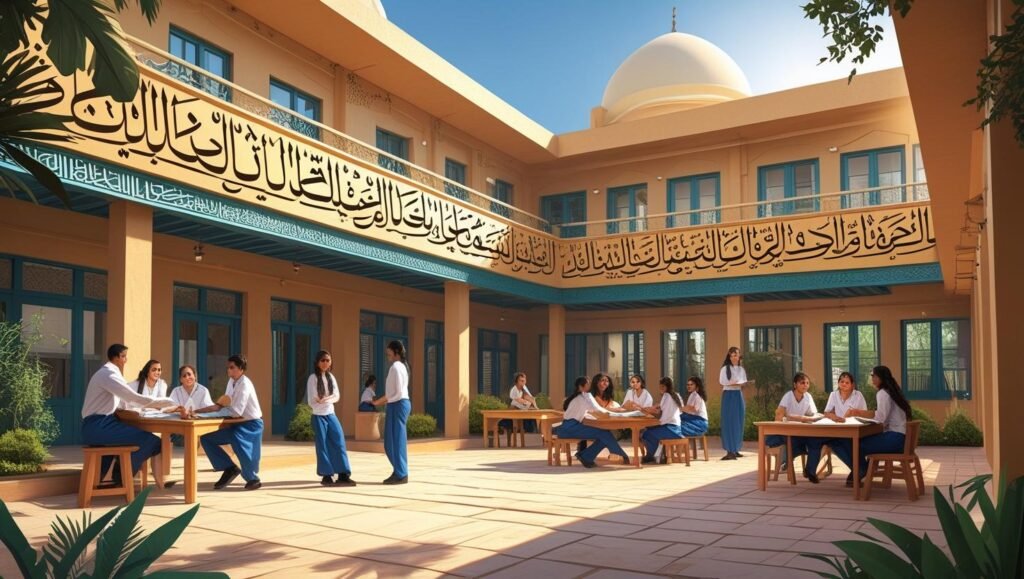
Teaching children the Quran with the Noor Al-Bayan method through online lessons brings a number of benefits, both for the child’s reading and memorization and for wider skills. The main benefits are set out below.
1. Easy access to learning
- Any time and any place: children can learn wherever an internet connection is available, which removes geographical barriers.
- Varied learning materials: video, electronic books and interactive exercises help children absorb information in different ways.
- Simple to use: a clear, uncomplicated lesson environment allows children to follow without difficulty.
- Access to teachers: children can communicate with their teacher easily and receive help when it is needed.
- Time and effort saved: without travel to a learning centre, children and parents save time and can put free periods to good use.
- Greater independence: children take part in deciding when they study and what they need to focus on.
2. Interaction and participation
- Direct interaction with the teacher: live lessons give children the opportunity to engage directly with the teacher, which strengthens understanding.
- Interactive assessment: educational games and quizzes make learning enjoyable, and immediate comments help children improve.
- Varied teaching approaches: games and visual presentations make lessons more attractive.
- Motivation and reinforcement: points, small rewards and recognition of achievements increase a child’s desire to learn.
3. Self-directed learning
- A personal pace: children study at the speed that suits them, with enough time to understand and absorb each point.
- Personal goals: children can set their own learning goals and follow their progress towards them, which raises motivation.
- Discipline and responsibility: self-directed learning builds personal discipline and self-management.
- Self-assessment: children learn to review their own performance and identify what needs improvement.
- Creativity: children can apply what they have learned in personal projects, which develops critical and creative thinking.
4. Stronger digital skills
Modern learning requires effective use of technology, and online Quran lessons develop children’s digital skills in several respects:
- Working with technology: children learn to use online learning tools and educational applications as aids to study.
- Research and critical thinking: children learn to look for Quranic and educational information and to judge whether a source is reliable.
- Producing digital content: preparing a simple presentation or writing down ideas develops design and expression skills.
- Communication: children learn to communicate with their teacher online clearly and courteously.
- Digital tools: children become familiar with text editors, drawing programmes and similar tools.
- Digital safety: children learn to protect their personal information and to deal with others online safely and appropriately.
- Wider horizons: children learn to explore new learning resources, which encourages independence and continued learning.
- Problem solving: using digital skills to solve problems strengthens critical and creative thinking.
5. Continuous and effective assessment
Continuous assessment is essential to a good learning experience, because it measures progress regularly and makes teaching more effective. In the early stages a child needs a methodical approach to understanding and memorization. Teaching with Tajweed trains the child in the rules of recitation so that the Quran is read correctly, and gradual memorization of letters and verses leads to sound Hifz within a simple, structured programme. Online teaching supports this with interactive tools and allows the teacher to follow the student’s development regularly, combining reading, Tajweed and repetition to fix what has been memorized.
- Measuring progress: performance is tracked over time to identify strengths and weaknesses, and reading and Tajweed skills are assessed regularly.
- Immediate feedback: students receive prompt comments, recognise their mistakes and learn from them at the right time.
- Adapted teaching: lesson plans are adjusted in the light of assessment results to suit each student.
- Self-motivation: regular assessment encourages students to set personal goals and achieve them.
- Varied assessment tools: short tests, small projects and presentations may all be used.
- Helping the family follow progress: teachers send regular reports to parents. At Noor Elbayan Academy, parents receive a report after every lesson.
- A sense of achievement: acknowledging progress strengthens the child’s sense of accomplishment.
Families who would like guidance on the most suitable programme for their children may contact Noor Elbayan Academy.
6. Flexible learning
The Noor Al-Bayan method offers considerable flexibility when taught online:
- A schedule that fits: lessons can be arranged at suitable times, including the times when the child concentrates best.
- Content matched to level: lessons are adjusted to different levels of understanding.
- Learning at the child’s own rate: each child progresses at an individual pace.
- Varied methods: video and interactive applications add variety.
- Study from anywhere: lessons can be reached wherever the internet is available.
- Flexible contact with teachers: children and parents can communicate with the teacher by message or call.
- Special needs: content can be adapted for children with special needs.
- Flexible assessment: assessments can be held when they are appropriate.
- Adaptability: flexible learning develops a child’s ability to adjust to change.
7. Teaching values and character
The Noor Al-Bayan method is an effective means of teaching values and good character through the Quran. It helps to instil positive values and to build a balanced personality.

8. Encouraging creativity
This approach encourages children to think creatively and to develop skills in several areas:
- Critical thinking: children are encouraged to ask questions and to reflect on the meanings of the Quranic text.
- Varied media and learning through play: videos, games and interactive stories make learning enjoyable and stimulate creativity.
- Artistic expression: children may produce drawings or multimedia projects related to the Quran, or create their own content.
- Innovation: personal projects connected to the lessons encourage children to research topics and develop new ideas.
- Facing challenges: children develop problem-solving skills and learn the value of learning from mistakes.
- Technology in learning: interactive applications and educational games support creative development.
- Appreciation of effort: teachers can encourage children by recognising and praising creative work.
- Responsibility: projects related to the environment or the local community develop a sense of responsibility and encourage creative solutions.
9. The support of parents
Parental support is one of the foundations of success when children learn the Quran online with the Noor Al-Bayan method.
Active participation
- Take part in learning activities with the child, which improves understanding and encourages learning.
- Help with homework and practice at home.
Confidence and motivation
- Offer encouragement and rewards when the child reaches a goal.
- Give emotional support, which builds the child’s confidence in the ability to learn.
A suitable learning environment
- Prepare a dedicated place for study at home, with the necessary materials to hand.
- Help the child organise time between study and other activities.
Communication with teachers
- Stay in contact with the teacher to follow progress and identify areas that need improvement.
- Listen to the teacher’s comments in order to guide the child better.
Values and character
- Reinforce the values learned from the Quran by applying them in daily life.
- Be a good example, so that the child understands the importance of these values.
Self-directed learning and resources
- Teach the child how to look for useful information and encourage self-assessment of progress.
- Provide books and other useful learning resources, and learn how to use educational applications alongside the child.
Additional activities
- Arrange extra learning activities at home that reinforce what was taught in lessons.
- Encourage participation in community activities that strengthen values and principles.
Emotional support and family communication
- Listen carefully to the child’s worries and difficulties in learning, and offer affection and guidance at difficult times.
- Keep communication open so that the child can express needs and opinions.
- Celebrate the child’s achievements and encourage continued learning.
10. Developing continuous learning
This approach builds a culture of lasting learning and adaptation, which supports a child’s intellectual and spiritual growth:
- Consistency: a flexible setting helps children form steady study habits and set long-term learning goals.
- Self-directed study and research: children learn to find useful resources and to explore areas of knowledge beyond the curriculum.
- Ongoing assessment and improvement: regular assessment shows children their strengths and weaknesses, and they can adjust the way they study accordingly.
- Critical thinking: questions and challenges prompt children to think deeply and to express their views.
- Lifelong learning: children come to value knowledge and to regard learning as a lasting part of life.
- Broader horizons: children become more open to the world and to new ideas.
- Use of technology: children learn to use modern technology for study and to apply their skills in everyday situations.
- Communication skills: regular contact with the teacher develops clear communication.
- Continuing support: constant support from the teacher strengthens the child’s sense of responsibility for learning.
Through the Noor Al-Bayan method the child learns each letter in a smooth, clear way, learns to read and write, and gains the rules of Tajweed needed for correct recitation and sound Hifz. The teacher plays a central part in making reading easier and explaining the verses in a simple manner.
Conclusion
In short, the Noor Al-Bayan method of teaching the Quran to children through online learning provides a comprehensive and flexible learning environment that supports essential skills and contributes to the balanced development of the child’s character.
Noor Elbayan Academy teaches the Quran and Tajweed online through live one-to-one lessons with certified Azhari teachers, and offers a free trial lesson. Parents may contact the academy to choose the programme best suited to their children.